Siargao and Mindanao
Siargao, the Philippines' teardrop-shaped surf island, and Mindanao, land of the Lumad peoples, Mount Apo volcano and Lake Sebu, remain largely untrodden by travelers.
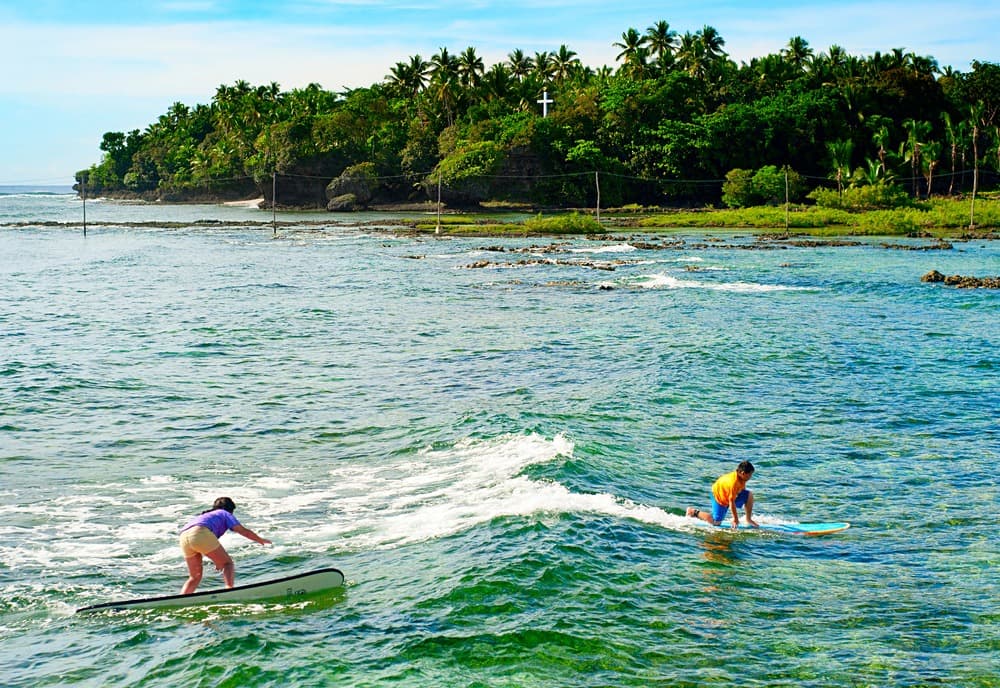
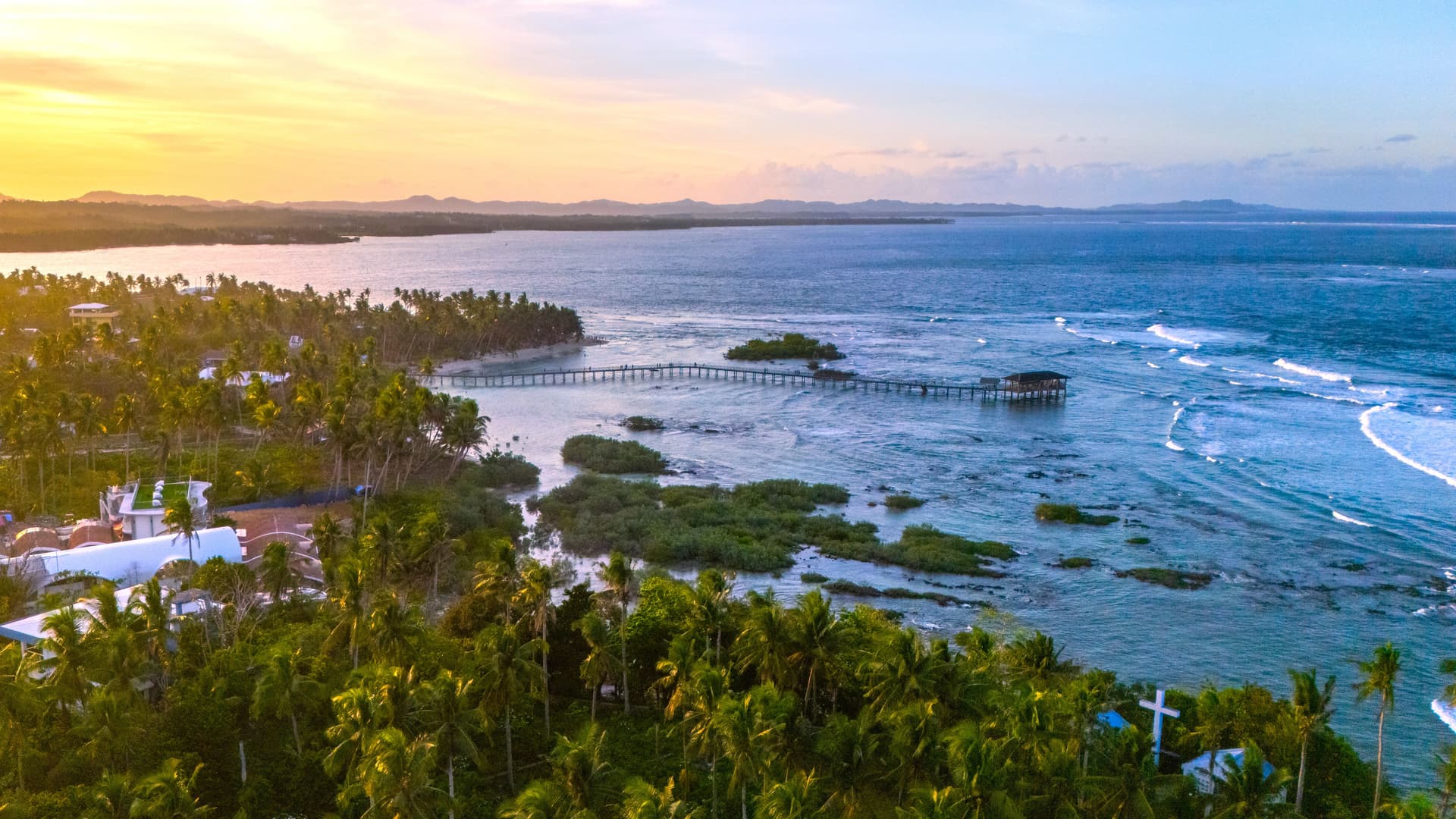
Siargao and Mindanao form the southeastern corner of the Philippine archipelago, two hours by air from Manila or Cebu. Siargao is a small teardrop-shaped island, 437 square kilometers, bordered to the east by the Pacific Ocean. This direct exposure to the open sea built its reputation among surfers: the Cloud 9 wave at General Luna forms on a shallow coral reef and delivers consistent barrels between August and November, peak swell season. The rest of the year, the island transforms and lends itself more readily to exploring lagoons and mangrove forests.
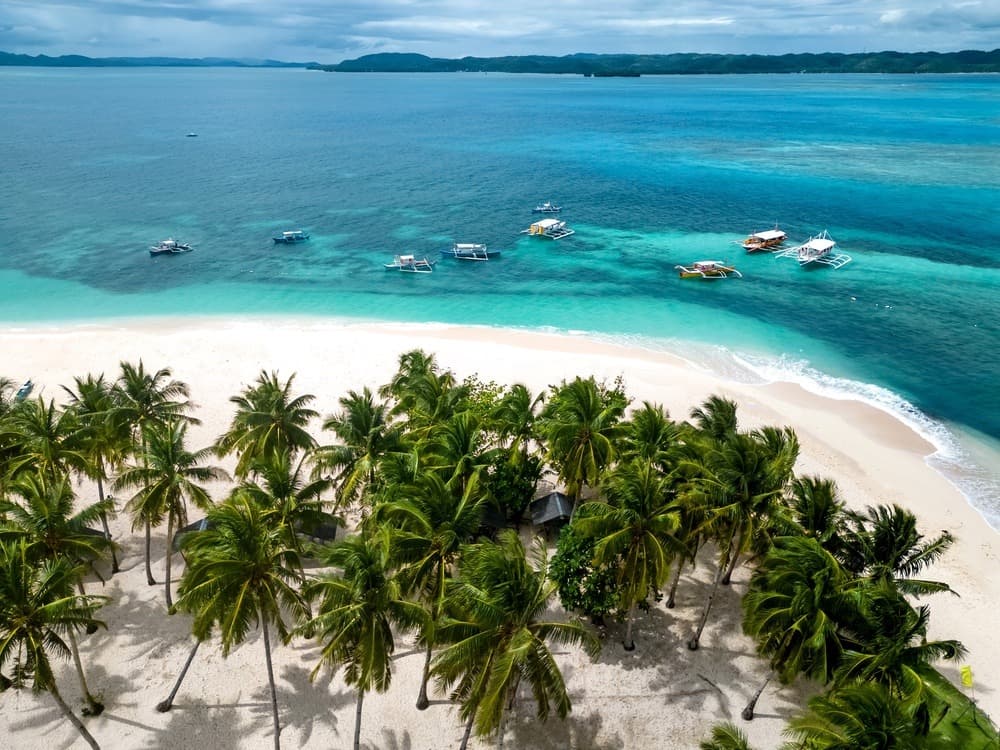
General Luna concentrates accommodations, surf schools and restaurants. From here depart scooter and tricycle loops toward Pacifico to the north, Burgos further west, or the rock pools of Magpupungko at Pilar, accessible at low tide. The three small neighboring islands—Naked, Daku and Guyam—make for day trips by bangka, the traditional outrigger boat. Over at Del Carmen, 4,200 hectares of mangroves harbor saltwater crocodiles and are best explored by motorized dugout canoe at dawn or late afternoon.
Mindanao, the country's second-largest island at 97,000 square kilometers, is an entirely different world. Here the nation reveals its most ethnically and religiously diverse face: Catholic Bisaya to the north and east, Muslim Maranao and Tausug communities to the west and south, highland Lumad peoples such as the T'boli around Lake Sebu, the Manobo, the Bagobo. Davao, on the southeastern coast, is the island's major metropolis, renowned for its durian market—that pungent, emblematic fruit—and as the gateway to Mount Apo, the country's highest peak at 2,954 meters, whose ascent demands three to four days of trekking.
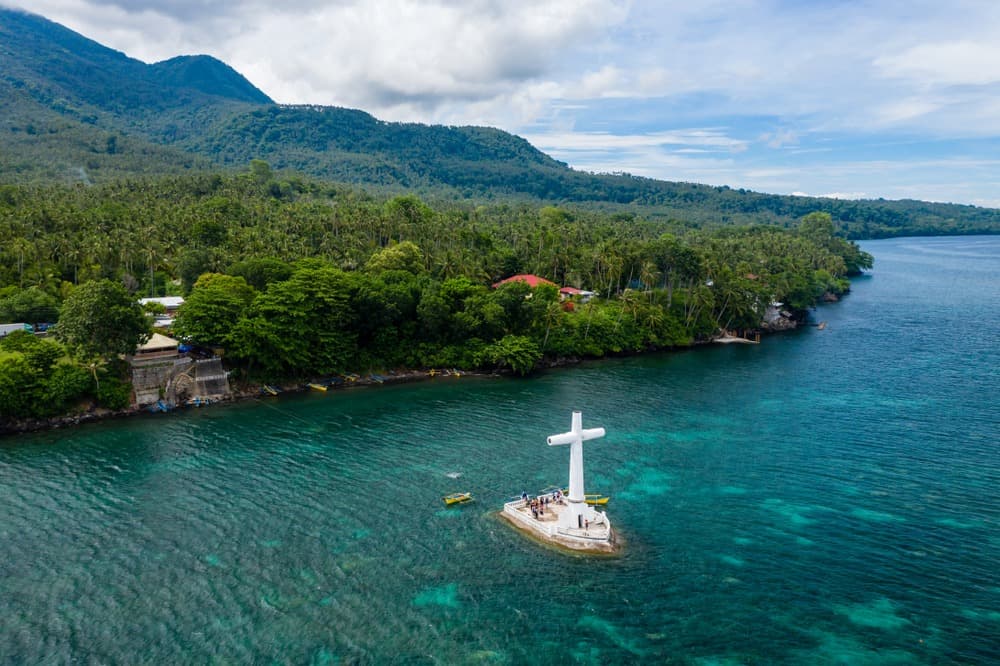
To the southwest, around Koronadal and Surallah, Lake Sebu sprawls across 354 hectares at 700 meters elevation, within ancestral T'boli territory. You can observe the weaving of t'nalak, a cloth woven from abaca fiber dyed with wax and tannin, its patterns dictated to the weavers in dreams by the goddess Fu Dalu. Further east, Bukidnon offers high plateaus ideal for hiking and rafting on the Cagayan River. Camiguin, a small volcanic island off the northern coast, merits a stop for its seven volcanoes, the Sto. Niño hot springs and the submerged cemetery at Catarman.
Mindanao's cuisine bears the mark of its multiple influences: kinilaw, a ceviche of tuna or marlin marinated in coconut vinegar, is a coastal specialty; rendang and piaparan, chicken cooked with shredded coconut, stem from the Maranao repertoire; suman sa lihiya, a sticky rice cake, pairs well with Davao's local cacao, one of the country's principal cocoa-growing regions. It's also in Davao that pomelo and mangosteen are cultivated, fruits you'll find at the stalls of Bankerohan Public Market.
A portion of western Mindanao, notably the Zamboanga Peninsula, the Sulu archipelago and certain Bangsamoro zones, carry travel advisories from foreign ministries due to local tensions and kidnapping risks. Our team in Manila concentrates its itineraries on open, stable zones: Siargao, Surigao, Davao, Lake Sebu, Bukidnon, Camiguin. We continuously monitor conditions on the ground to adjust routes as needed.
To Discover
Cloud 9 and the General Luna coast. The Cloud 9 reef break attracts surfers between August and November, when Pacific swell forms regularly. Out of season, the neighboring passes at Quiksilver and Tuason remain workable for intermediate levels.
Magpupungko and the rock pools. At Pilar, on Siargao's eastern shore, the tide's retreat unveils natural basins carved into coral rock, two to four meters deep. The access window lasts roughly six hours around low tide.
Del Carmen mangroves by bangka. 4,200 hectares of mangrove you traverse at daybreak to observe herons, kingfishers and, in the most remote channels, the saltwater crocodiles that still inhabit the estuary.
Lake Sebu and T'boli weavers. At 700 meters elevation in southern Mindanao, Lake Sebu is home to the T'boli community. Visit t'nalak workshops at Lake Sebu Municipality and zip-line over Seven Falls.
Mount Apo ascent from Kapatagan. Three to four days of trekking to reach the 2,954-meter summit of the country's highest peak, through mossy forest, Lake Venado and sulfur fields. Permit required and a local guide mandated by the Department of Tourism.
When to Visit
Siargao has a tropical climate with no marked dry season. The most stable months run from March through early June, with temperatures of 27 to 32 °C and brief showers. Surf season spans August to November, when swell is most consistent but typhoons can strike the east coast: December 2021 saw Typhoon Odette devastate parts of the island, now rebuilt. From December to February, northeast trade winds bring windier, less stable conditions.
On mainland Mindanao, the southern coast around Davao is sheltered from typhoons by its latitude and remains navigable nearly year-round, with a drier season from February to May. At altitude, at Lake Sebu or Mount Apo, nights dip to 15 °C between December and February—pack a fleece jacket. The southwest monsoon season, June to September, mainly affects the western coast and only moderately impacts Davao and Surigao.
Practical Advice
Allow a minimum of 5 nights on Siargao to enjoy both the General Luna coast, the three small islands and the northern loop toward Pacifico and Magpupungko. Sayak Airport (IAO) receives daily flights from Manila and Cebu. For mainland Mindanao, Davao (DVO) is the main entry point; plan for 3 to 4 nights to combine Bankerohan Market, an excursion to Samal Island and a drive up to Lake Sebu, which takes 5 to 6 hours from Davao.
Siargao pairs well with the central Visayas, accessible by direct flight from Cebu, or with a return via Manila to continue to Palawan or Northern Luzon. Comfort levels on Siargao range from simple guesthouses to upscale resorts in General Luna; Mindanao remains more rustic, except in Davao. The region suits surfers, travelers seeking authentic cultural encounters with Lumad peoples, and hikers for Mount Apo. Families with very young children: we recommend focusing on Siargao and Camiguin instead.