Palawan
450 kilometers of karst island between Mindoro and Borneo, three distinct zones (El Nido, Coron, Balabac) each demanding their own travel rhythm.
Palawan stretches 450 kilometers between Mindoro and Borneo, a slender island bordered by 1,780 satellite islets. Our team based in Manila programs the region year-round, but we treat it as three distinct sub-destinations: the north around El Nido and Coron, the center around Puerto Princesa, the south around Port Barton and Balabac. Conflating them into a single short itinerary remains the most frequent error we correct during planning.
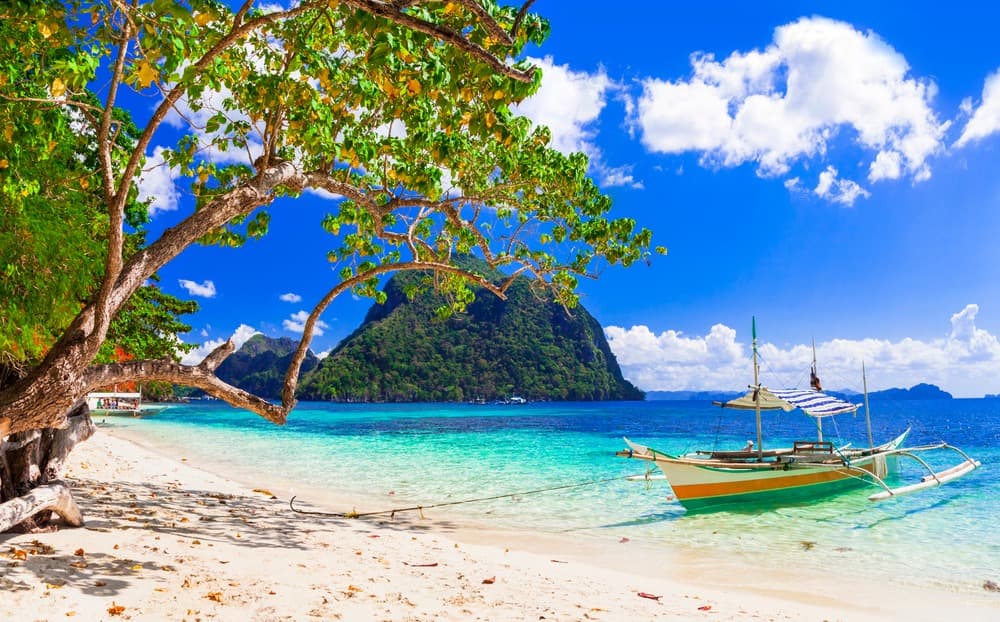
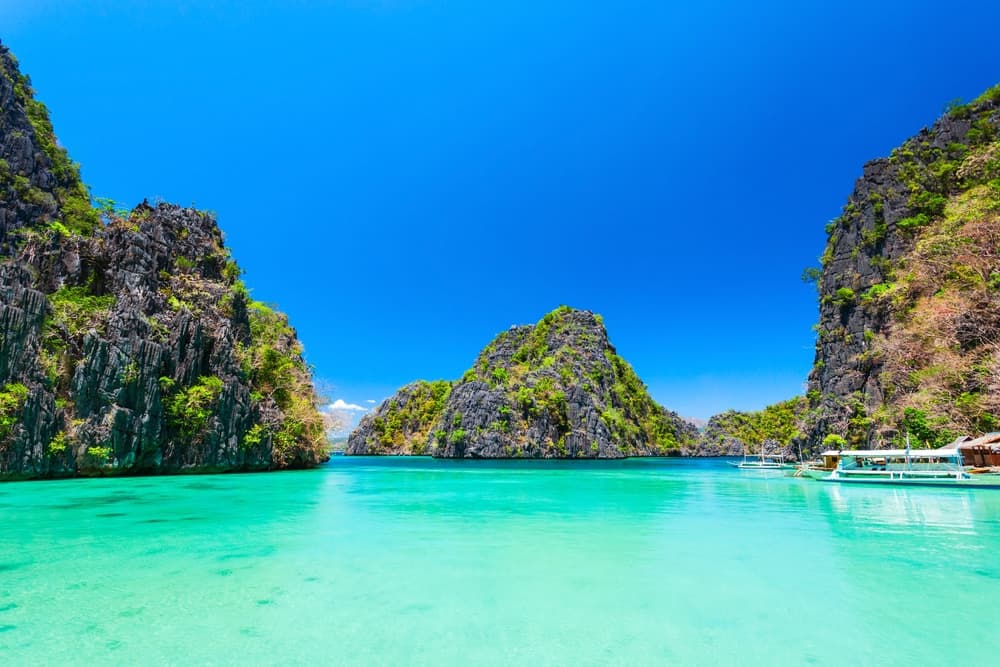
Topography explains everything. The island's limestone and ultramafic backbone produces those vertical cliffs that bangkas navigate along El Nido, within the Bacuit archipelago. The lagoons of Miniloc, the Big Lagoon, the Small Lagoon, Secret Lagoon, are karst sinkholes flooded by the sea. Further north, at Coron, the same phenomenon creates Kayangan Lake, ringed by black limestone peaks, and the seven lakes of Cabugao. It was in Coron Bay that the American Navy sank twelve Japanese vessels on September 24, 1944. The wrecks of the Irako, Olympia Maru and Akitsushima rest between 12 and 40 meters, accessible by scuba diving for most, snorkeling for the highest superstructures.
Puerto Princesa, the provincial capital, serves as the air gateway from Manila or Cebu. The city itself holds little appeal, but it opens onto the Sabang Underground River, UNESCO-listed in 1999. The waterway traverses 8.2 kilometers of limestone cavern beneath Mount Saint Paul, of which 4.3 kilometers are navigable by canoe. We recommend visiting early morning to avoid tour groups disembarking around 10 a.m. An hour and a half north of Puerto Princesa, Sabang also serves as a base for reaching Port Barton by road, a four-hour journey on a partially paved track.
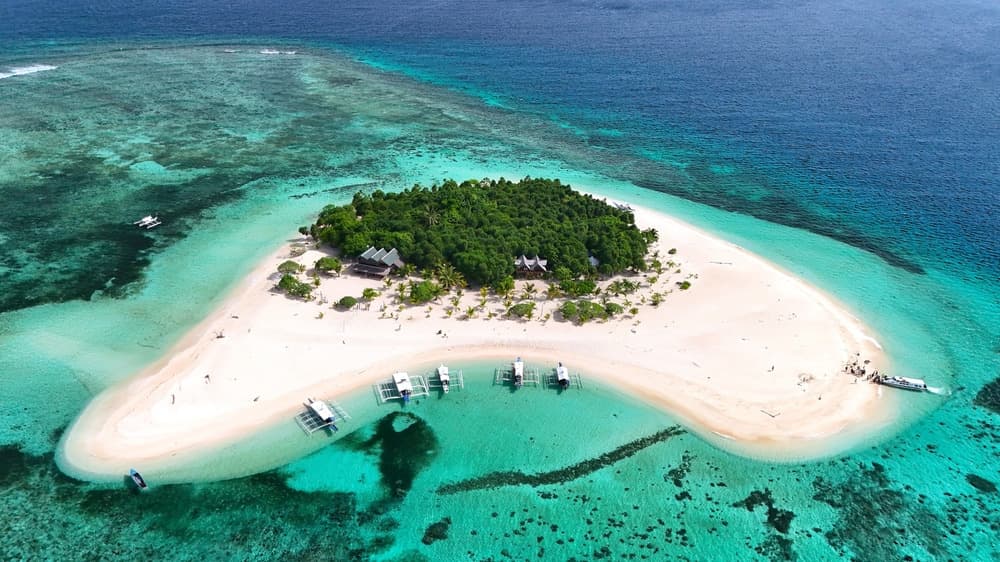
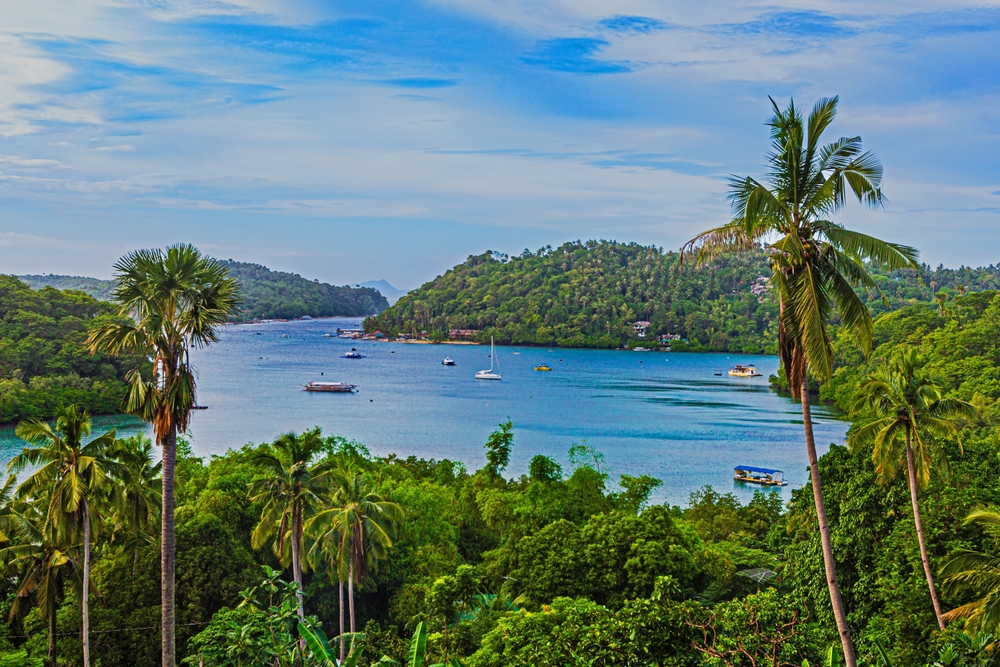
The south remains our preferred territory for travelers seeking to escape El Nido's crowds. Port Barton, a fishing village of 3,000 inhabitants, has had 24-hour electricity only since 2018. Bangka outings service some ten islands—German Island, Exotic Island, Inaladelan—rarely with more than three or four boats per site. Even further south, the Balabac archipelago, at the extreme southern tip facing Borneo, requires two days of transfers from Puerto Princesa via Rio Tuba. The sandbanks of Onuk and Candaraman emerge at low tide over turquoise waters, and the Molbog population lives primarily from fishing and copra cultivation.
Population-wise, Palawan is home to several indigenous groups distinct from the dominant Tagalogs: the Tagbanua around Coron and the underground river, the Batak in the mountainous interior north of Puerto Princesa, the Pala'wan in the south. The Tagbanua of Coron themselves manage access to Kayangan Lake and Cabugao Bay following an ancestral decision from 1998, collecting entrance fees. At the table, tamilok, mangrove worm consumed raw with calamansi and vinegar, remains a Sabang curiosity. More broadly, mangrove crab in coconut sauce (alimasag sa gata) and tuna kinilaw, the Philippine version of ceviche, define coastal cuisine.
Economically, tourism doubled between 2015 and 2019 before the pandemic, with El Nido in particular suffering pressure on its waters. Visitor quotas on lagoons A and B were instituted in 2023. We systematically integrate these constraints into our programs, prioritizing early morning departures and local operators committed to waste management.
Must-See
Bacuit lagoons by private bangka. A day between Miniloc, Shimizu and Secret Lagoon, departing Corong-Corong at 7 a.m. to precede the tour group fleets. Waters between 27 and 29 degrees, snorkeling over the Big Lagoon's coral gardens.
Diving on Coron's wrecks. Twelve Japanese wrecks sunk in September 1944 rest between 12 and 40 meters in the bay. The Irako, a 147-meter refrigerated cargo vessel, requires Advanced certification. The Olympia Maru remains accessible to Open Water divers.
Sabang Underground River. Canoe navigation over 4 kilometers through a limestone cave inhabited by fruit bats and swiftlets. Mandatory permit issued the day before in Puerto Princesa, slots limited to 900 visitors daily.
Balabac archipelago. Two days of transfers from Puerto Princesa to reach the Onuk and Candaraman sandbanks facing Borneo. No permanent electricity, homestay or basic lodge accommodation, dugongs observable certain seasons.
Port Barton in low season. Between June and September, the village maintains its fishing rhythm, outings with 4 or 5 people maximum to Exotic and German islands. Rains fall late afternoon, mornings remain clear.
When to Go
The dry season runs from November to May, with peak tourism between December and March. Temperatures oscillate year-round between 28 and 32 degrees Celsius by day, rarely dropping below 25 at night. The sea remains at 27-29 degrees consistently. December to February offer the most stable conditions: moderate amihan (northeast) winds, underwater visibility of 20 to 30 meters at Coron. April and May heat up further, to 34 degrees, and water can reach 31 degrees, which occasionally bleaches shallow corals.
The rainy season, June to October, doesn't prohibit travel but complicates it. Showers fall mostly late afternoon and rarely last more than an hour, except during typhoons. Palawan sits, however, outside the main trajectory of typhoons striking Luzon and the northern Visayas, making it an interesting fallback option in August-September. Coron and the north face more habagat (southwest monsoon) than Puerto Princesa and the south. We avoid Balabac between July and September: sea transfers there become unpredictable.
Practical Advice
We recommend a minimum of 6 nights on Palawan to combine two of the three zones, for example El Nido and Coron connected by fast ferry in 4 hours (Montenegro Lines, daily departures at 6 a.m.), or Puerto Princesa and Port Barton by road. Attempting everything in one week imposes heavy internal transfers, the island being 450 kilometers long with slow roads. Allow 10 to 12 nights to include Balabac. Domestic flights arrive at Puerto Princesa (PPS), El Nido (ENI, short runway, AirSwift flights only) and Busuanga (USU) for Coron, from Manila or Cebu.
Palawan combines naturally with the central Visayas (direct Puerto Princesa-Cebu flight) for those wishing to alternate limestone beaches and Spanish heritage, or with Mindoro and Romblon to extend the marine experience northward by boat. Chaining with North Luzon (cordilleras, terraced rice fields) creates strong contrast between sea and mountain but requires two weeks minimum. Comfort-wise, El Nido offers high-end resorts on private islands (Pangulasian, Lagen), Coron mid-range establishments, Port Barton and Balabac rustic only. The region suits contemplative travelers, divers and families with children from 8 years old, less so hikers who will find more in Luzon's cordilleras.