Which Philippine island to choose for a trip to the archipelago?
With more than 7,000 islands, the Philippines archipelago offers great diversity of landscapes.
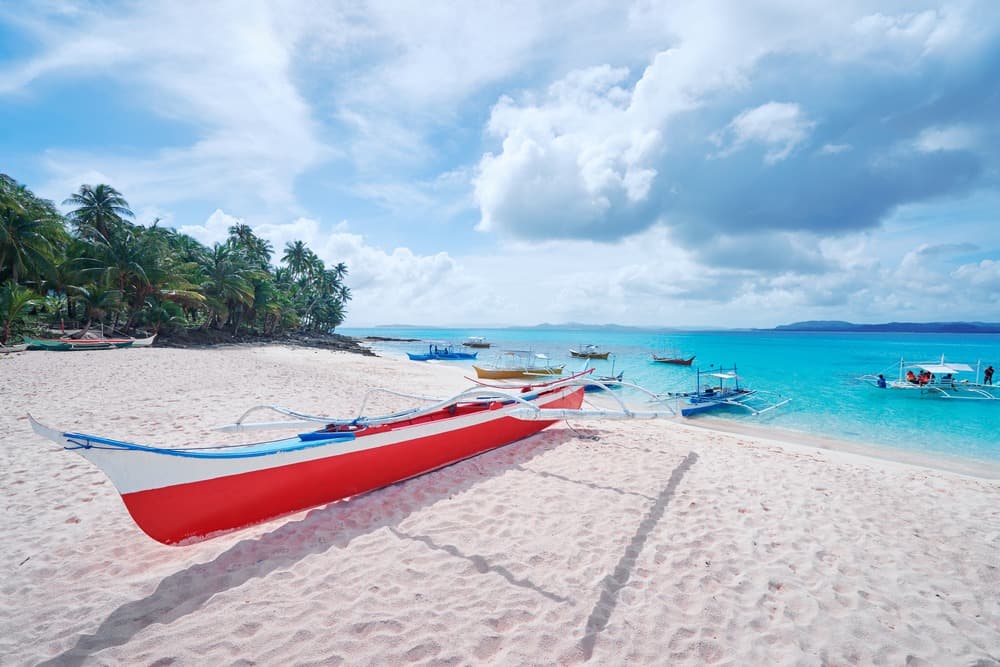
With more than 7,000 islands, the Philippines archipelago offers exceptional diversity of landscapes. Turquoise lagoons, volcanoes, white and black sand beaches, tropical forests, pristine marine habitats… Each Philippine island has its own unique character! From Mindoro to Siargao via Cebu, Camiguin, and Palawan: discover our selection of the most beautiful Philippine islands to visit based on your interests (scuba diving, hiking, surfing, etc.).
Mindoro Island: diving at Puerto Galera
Mindoro is the seventh-largest island in the Philippines. It is home to Puerto Galera, a municipality located in Oriental Mindoro province. Renowned for its diving sites, it allows you to discover all the richness and beauty of the ocean floor just minutes from the beach (no boat is necessary, though offshore excursions are also available).
Near the shores, you can spot sea turtles, sponges, lionfish, clownfish, manta rays, magnificent mantis shrimp, and occasionally whale sharks! Among the most famous sites, don't miss the Hole in the Wall reef where you can also observe groupers and moray eels.
Another advantage? Puerto Galera has numerous diving spots suitable for children; perfect for sharing quality family moments around a common activity! The Puerto Galera beach is also ideal for snorkeling and swimming, in a postcard-perfect setting.
Mindoro Island is also home to Mangyan village (where several indigenous tribes live) and Mount Halcon, the island's highest peak (which can only be climbed by experienced hikers).

Practical information ● How to get there: by plane from Manila or by ferry from Batangas port to Calapan. ● Best season: between February and April when winds are milder ● Best for: hikers, diving enthusiasts, outdoor activities |
Cebu Island: one of the largest Philippine islands
Cebu is among the largest islands in the Philippines. It is located in the center of the archipelago, between Mindanao (to the south) and Luzon (to the north). It is home to Cebu City, the capital of the province of the same name. It was discovered by Ferdinand Magellan, a Portuguese explorer serving the Spanish crown.
The island preserves numerous monuments from its colonial past, including the triangular fortress of Fort San Pedro, built in 1565 by the conquistadors. You can also admire the Magellan's Cross and the Basilica Minore del Santo Niño, considered the oldest Catholic church in the archipelago.
At Moalboal, a charming village in the southwest of the island, don't miss the unique and incredible experience of… the sardine run! Diving excursions are organized to dive with schools composed of thousands of specimens.
During a stopover on Cebu Island, also don't miss Kawasan Falls, a trio of waterfalls accessible via a jungle hike. To enjoy the place with fewer tourists, go early in the morning. Another way to access it is through a canyoning course.
Finally, in the south of the island, Osmeña Peak is ideal terrain for hiking.
Another must-do experience? Visiting Hilutungan Island located nearby. It is a protected zone that hosts an exceptional marine sanctuary, renowned for its rich marine life. An opportunity to see seahorses, as well as mandarin fish and whale sharks.
Practical information ● How to get there: the island has an international airport with numerous foreign flights and domestic flights. Flights from Manila or Davao take less than 2 hours. ● Best season: December to March ● Best for: history enthusiasts, snorkelers, hikers, and extreme sports lovers (canyoning) ● To note: The Kawasan Falls site requires an entrance fee |
Bohol and Panglao Islands: for hiking
Unlike other islands in the archipelago, Bohol Island is less famous for its beach resorts than for its terrain and tropical forests. One of the emblematic sites is Chocolate Hills; a collection of over 1,200 hills covered with rice fields and plantations (with a chocolate-brown color during the dry season).
This part of the island has numerous hiking trails where you can spot the local stars: tarsier monkeys, recognizable by their large eyes! If you don't spot any? Head to the Tarsier Sanctuary where you can also certainly admire these small primates in their natural habitat.
Another typical local activity: a boat ride on the Loboc River. The river banks can be explored by paddle or mountain bike.
Panglao Island is also renowned for its diving sites. Its seabed is home to coral reefs, inhabited by barracudas, trevally, and sea turtles. It's easy to reach more than 75 islands and islets, appreciated for their diving spots, from Panglao.
This island also is home to Hinagdanan Cave. Discovered by chance by a local farmer, it dazzles with its limestone beauty. Naturally lit by sunlight filtering through openings in its rocky walls, it delights photographers with its interplay of light, impressive stalactites, and stalagmites.

Practical information ● How to get there: you can reach Bohol by ferry (from Cebu, Siquijor, and Negros islands) or by plane from Manila or Cebu. ● Best season: between February and April (the wettest months are July, September, and October). ● Best for: lovers of spectacular landscapes and nature enthusiasts |
Camiguin Island: the volcanic isle with hot springs
Camiguin is still a relatively undiscovered island, nicknamed "the island born from fire". It has 13 volcanoes, some of which are still active. Along the coast, you'll find black sand beaches, due to volcanic activity!
Its terrain, made up of peaks, forests, and waterfalls, also has numerous hot and cold water springs, including those of Santo Niño Cold Spring (which is among the most popular natural pools for locals). Hibok Hibok Ardent Hot Spring, nestled in the mountains, is considered the island's most beautiful spring.
Camiguin is also home to several waterfalls where you can swim. The Katibawasan Falls, over 70 meters high, are the most impressive, while the Tuasan Falls are renowned for the beauty of their rock formation.
Camiguin Island has about a dozen renowned diving spots, where you can see rays, turtles, and sharks. Its unique feature? The island offers the opportunity to try muck diving: diving in an aquatic environment made of black sand and volcanic rock formations. The most beautiful site is Jigdup Reef.
Finally, if you visit the island around mid-October, you'll have the chance to attend the Lanzones Festival, (a fruit with notes of lemon and lychee). This event aims to give thanks for abundant harvests. An opportunity to witness parades, traditional dances, and street performances in a festive atmosphere!
Practical information ● How to get there: by ferry from Bohol Island (less than 4 hours crossing) or domestic flight from Cebu (1 hour) ● Best season: between February and April ● Best for: hikers (around volcanoes), hot spring enthusiasts, and scuba diving lovers. |
Boracay Island: for water sports enthusiasts
A small island in the Visayas archipelago, Boracay is located approximately 315 km south of Manila, in the heart of the Philippine archipelago. It is popular for its beach atmosphere and white sand beaches with panoramic views of the open sea.
The island is home to five-star beachfront hotels, as well as establishments within limited budgets. With its many bars and restaurants, the island is also appreciated for its festive atmosphere and nightlife.
Boracay Island is also ideal for water sports enthusiasts (snorkeling, scuba diving, paraw sailing, kitesurfing, etc.). Note that you can rent a paddle or kayak to explore and discover the coastline. The other must-do activity on the island? Cliff jumping!
For less adventurous travelers, opt for a boat excursion instead and discover the surroundings, such as Crocodile Island, Magic Island, Ariel's Point, or Puka Beach. Cruises also lead to Crystal Cove Island.
Among other emblematic sites, don't miss the sublime White Beach, which stretches for several kilometers and is divided into three distinct zones (upscale resorts, lively restaurants and bars, and quieter zone for travelers seeking peace). On the opposite side, you'll find Bulabog Beach, a renowned spot for kitesurfing.

Practical information ● How to get there: take a domestic flight from Manila or Cebu to Caticlan Airport. From there, go to the port to take a boat to Boracay (approximately 15 minutes crossing). ● Best season: January to April to fully enjoy the beaches ● Best for: water sports enthusiasts, party-minded travelers, or those seeking comfort. |
Palawan Island: gateway to Bacuit Bay
Located in the Sulu Sea, in the southwest of the Philippines, Palawan is the main island of the archipelago of the same name. The fifth-largest island, it stretches for 450 kilometers and offers great landscape diversity across its terrain.
With the numerous islands surrounding it, it forms a vast province renowned for its lagoons with turquoise waters, coral reefs, limestone cliffs, and tropical forests. If Palawan is so highly valued for its beauty, it's thanks to local efforts to protect this exceptional environment. Indeed, many areas of the island are protected and classified.
In the north of the island, you'll find El Nido town, one of Palawan's leading destinations. It is renowned for its limestone cliffs, lagoons, and secluded beaches, as well as being the gateway to the Bacuit Bay.
In the bay? You can do the famous Island Hopping (a boat tour that allows you to discover the most beautiful natural sites in the area, such as Small Lagoon, Big Lagoon, or Nacpan Beach).
Nearby, you can also admire Kuyawyaw Falls or attempt the ascent of Taraw cliff (Taraw Cliff); a difficult hike requiring good fitness, but offering breathtaking views!
At the foot of the limestone mountains of Sabang Bay, lies the Puerto Princesa Underground River National Park. UNESCO-listed, it is home to a vast network of karst caves, as well as an underground river spanning 8.2 km winding between stalactites and rock formations.
Finally, Palawan ranks among the world's best diving and snorkeling spots, with pristine coral gardens and abundant marine life. The Tubbataha Marine Reef Park (closed to boats) features 100,000 hectares of preserved seabed and has been UNESCO-listed since 1993.
Practical information ● How to get there: Palawan has two airports receiving numerous international or direct flights from Manila. ● Best season: January to April, when the sea is calm and the risk of rainfall very low. From May to December, showers punctuate the day. ● Best for: nature and beach lovers, diving and extreme hiking enthusiasts. ● To note: Tubbataha Marine Park is only open three months a year, from mid-March to mid-June when weather permits. |
Coron Island: to see the Skeleton wreck while diving
Located north of Palawan, Coron Island belongs to the Calamian Islands archipelago, alongside Busuanga, Sangat, Culion, and numerous micro-islands. Coron is renowned for its karst landscapes, mountain lakes, and lagoons.
Completely protected due to its ecological characteristics, Coron is less crowded than northern Palawan, making it an ideal destination for nature-seeking travelers. It is also famous for the beauty of its paradisiacal beaches, such as Banul Beach.
From the lively town center (Coron Town), don't miss climbing Mount Tapyas. After 700 steps to reach the summit, you'll enjoy a sublime 360° panorama of the island and surrounding areas. Choose the morning for more tranquility or the evening to watch the sunset – the trail is lit for descent.
Coron Island is also a premier diving destination in the Philippines. The seabed is home to corals, rays, tropical fish, turtles, and notably, World War II wrecks.
Among them? The Skeleton wreck, a former Japanese supply ship sunk in 1944, offers diving accessible to both beginner and advanced divers. The SietePecados Marine Park is also popular for snorkeling.
Inside the island, Kayangan Lake is prized for its water purity and mineral setting. After a short climb, a viewpoint offers an unobstructed view over the bay before lake access, perfect for swimming and snorkeling.
Meanwhile, Barracuda Lake stands out for its temperature variations from the mix of fresh and saltwater! Other emblematic island sites complete the experience, such as Twin Lagoons.
Practical information ● How to get there: there are flights from Manila, as well as from other major cities or Cebu Island. ● Best season: during summer season, particularly between March and May. ● Best for: snorkeling and diving enthusiasts (World War II wreck). ● To note: it's possible to take 3-5 day cruises between El Nido and Coron aboard a banka, a traditional Philippine boat. |
Siargao Island: the Philippine island spared from over-tourism
Located in the Caraga region, Siargao is an island still spared from mass tourism. Renowned for its laid-back atmosphere, it appeals with its authentic character and preserved nature. Siargao can be explored by scooter or bicycle.
Siargao Island is also a must-visit destination for surfers worldwide, attracted by the famous Cloud 9, the reef-break most renowned in the Philippines. This mythical spot, intended for experienced surfers, regularly hosts World Surf League competitions.
The island is full of less challenging breaks, such as Tuason Point (nicknamed "mini Cloud 9"), or Jacking Horses (suitable for beginners). Beyond surfing, you can also kayak or snorkel.
The natural pools of Magpupungko Rock Pools rank among the most popular sites. These tidal basins are perfect for swimming. The journey to reach them also offers a wonderful ride! You can reach the sites by scooter but be careful: these natural pools are subject to tides. To make the most of them, check water level schedules.
Nearby, Sugba Lagoon unveils turquoise waters surrounded by mangroves and karst formations. Accessible by boat from Del Carmen port, the lagoon is perfect for paddling and kayaking.
Finally, it's possible to visit Siargao Island and the surroundings as part of an island hopping tour. An opportunity to discover the coastlines and emblematic sites nearby, such as the Daku Islands and Naked Island (completely devoid of vegetation, hence its name).

Practical information ● How to get there: direct flight from Manila (approximately 2 hours) or from Cebu (1 hour) ● Best season: summer… but between November and December, the island welcomes very many tourists. ● Best for: surfing and diving enthusiasts. |
Frequently asked questions
Which is the most beautiful island in the Philippines?
Palawan Island is considered one of the most beautiful islands in Asia. This distinction refers to its exceptional beauty, UNESCO-listed cave networks, coral gardens, and diving spots. This Philippine island is also renowned for the conservation of its environment and ecosystems.
Which is the safest island in the Philippines?
By its geographical position and geological context, Palawan is considered the safest Philippine island regarding typhoons and earthquakes.
What is the best time to visit the Philippines?
The best time to visit the Philippines depends on the season and climate. The dry season (December to April) offers pleasant temperatures, ideal for water activities and outings. The wet season (May to November) means heavy rains but also lower rates due to lighter tourism than summer.
Audrey DENJEAN
SEO web writer, Audrey Denjean puts her writing at the service of English-speaking travelers. Through her blog articles, she explores what makes a country's soul – its emblematic sites, its cuisine, its traditions, its history... Her goal? To convey much more than just travel information, but to describe an atmosphere, share anecdotes, that make each country different and make you want, after each reading, to go explore the world.
Frequently asked questions
A 2-3 week trip is ideal to discover 2-3 Philippine islands comfortably. If you have more time, a month allows you to combine destinations like Palawan, Siargao, Cebu, and Bohol. Allow time for inter-island transportation (domestic flights, ferries) which can take a full day.
Mindoro Island, with its many child-friendly diving spots at Puerto Galera, is particularly recommended for families. Boracay, with its calm waters and many amenities, is also very popular. Bohol, with its Chocolate Hills and tarsier monkeys, offers original activities for nature-curious children.
French citizens do not need a visa for a tourist stay of less than 30 days in the Philippines. An extension can be requested on-site at the Bureau of Immigration to extend your stay up to 59 days. Your passport must be valid for at least 6 months beyond your planned return date.
The two main means of transport between Philippine islands are plane and ferry. Domestic flights from Manila or Cebu serve most major islands (Palawan, Siargao, Boracay). Ferries, cheaper but longer, connect notably Cebu to Bohol, Bohol to Camiguin, or El Nido to Coron via banka cruises (traditional boat).
Siargao is THE must-visit surfing destination in the Philippines, with its legendary Cloud 9 spot reserved for advanced surfers and several other breaks for all levels like Jacking Horses for beginners. Boracay also offers favorable conditions for kitesurfing, particularly at Bulabog Beach.