Philippine Culture and Traditions
Philippine culture and traditions form a living tapestry, shaped by ancient indigenous heritage, three centuries of Spanish influence, and modernity marked by American presence
Philippine culture and traditions form a living tapestry, shaped by ancient indigenous heritage, three centuries of Spanish influence, and modernity marked by American presence. This diversity manifests in languages, festivals, religious practices, and folk arts. From region to region, lifestyles vary, yet family values, conviviality, and a spirit of sharing remain at the heart of daily life.
Identities and Influences
The country's identity was forged at the intersection of indigenous cultures and three centuries of Spanish heritage, visible in religion, celebrations, and numerous social customs. American influence, arriving in the 20th century, shaped education, media, and the prominent place of English. Today, nearly 170 regional languages coexist alongside Filipino and English, illustrating the archipelago's cultural richness.
Courtesy and Hospitality
Daily life is rooted in courtesy, restraint, and respect for elders, notably expressed through the traditional mano gesture. Interactions favor a gentle tone: raising one's voice or showing anger is frowned upon. Family holds a central place, with shared meals and strong solidarity in villages. Travelers quickly sense this warmth: spontaneous invitations, smiling conversations, and simple yet generous hospitality are commonplace. Proper dress is appreciated in religious settings, but relaxed attire is the norm elsewhere.
Festivals, Rituals, and Traditions
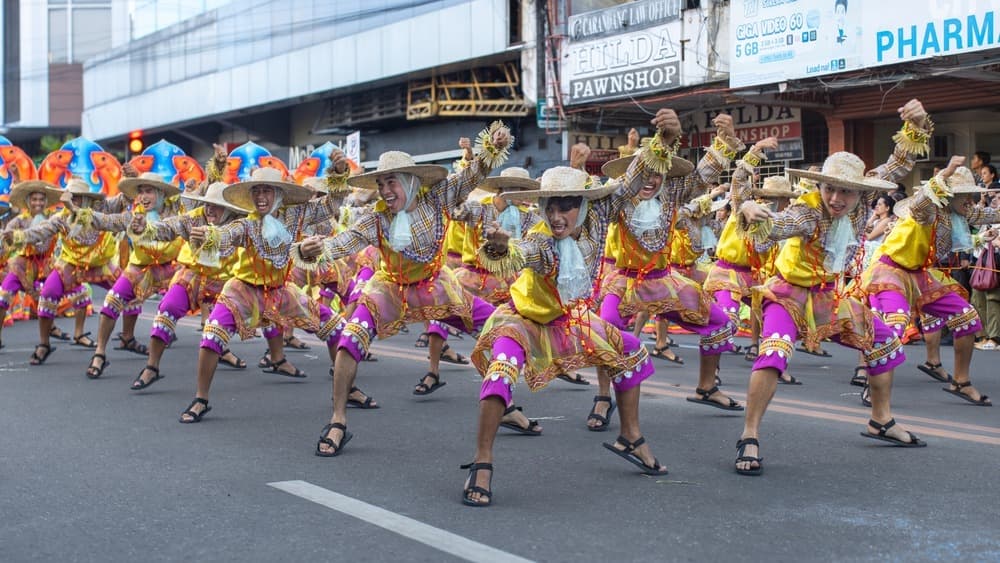
Philippine festivals are among the most vibrant aspects of local culture. Largely inherited from the Spanish period but enriched by pre-colonial or regional practices, they punctuate the year and bring together families, neighbors, and visitors in a festive atmosphere.
The year's highlights:
- Regional fiestas – Each town honors its patron saint with parades, colorful costumes, and lively music. Cebu's Sinulog or Aklan's Ati-Atihan rank among the most celebrated.
- Major religious celebrations – Semana Santa (Holy Week), Christmas, and All Saints' Day mobilize entire communities, blending Catholic rites, processions, and family gatherings.
- Traditional rituals – In rural regions, ceremonies tied to agricultural or maritime cycles persist, often accompanied by singing or offerings.
- Ancestral dances and music – The tinikkling, danced between bamboo poles, or the singkil, a royal dance of Moro origin, showcase the wealth of local cultural influences.
Cuisine and Local Flavors
Philippine cuisine reflects every layer of the country's history. Malay influences appear in the use of coconut milk and gentle spices, while Chinese tradition introduced noodles, broths, and quick cooking techniques. The Spanish era left behind braised dishes and festive fare, while American influence shows in modern eating habits.
Adobo, the national dish, varies across regions. Sinigang, a tamarind-sour soup, adapts seasonally with different meats and vegetables. Lechon, spit-roasted pig, is essential at major celebrations. Markets and turo-turò stalls offer a vast array of everyday dishes: grilled skewers, fish, lumpia, sticky rice, and coconut-based desserts. Travelers will also discover meryenda, a morning or afternoon snack, integral to the local rhythm.
Craftsmanship and Traditional Skills
Philippine craftsmanship reflects regional diversity and the importance of manual traditions in daily life. Many skills have been passed down through generations, blending utility, aesthetics, and cultural identity.
Main expressions of local craft:
- Traditional weaving – In villages, natural fibers, rattan, and abaca are woven into baskets, textiles, and ornaments bearing patterns from indigenous cultures.
- Carving and woodwork – In the Cordillera, the Ifugao continue crafting bulol, protective figures linked to rice terraces. Other regions produce carved objects for the home or celebrations.
- Utilitarian and decorative objects – Pottery, shell jewelry, shaped bamboo, kitchen utensils, and mini-sculptures testify to the bond between craft and daily life.
- Maritime skills – On certain islands, the construction of traditional small vessels endures, a direct legacy of Austronesian cultures.
Practical Tips for Respectful Immersion
Traveling to the Philippines invites an attentive and respectful approach. To integrate smoothly:
- Respect local beliefs and dress appropriately in religious settings.
- Learn about regional customs, especially in indigenous areas.
- Avoid abrupt gestures, sharp remarks, or raised voices.
- Ask permission before photographing people, ceremonies, or sacred sites.
- Preserve social harmony by avoiding causing anyone to lose face.
These simple gestures foster genuine encounters and harmonious immersion in Philippine daily life.
