Banaue
Banaue
Banaue, the eighth wonder of the world: millennia-old rice terraces, Ifugao villages and treks deep in the Cordillera of the Philippines.
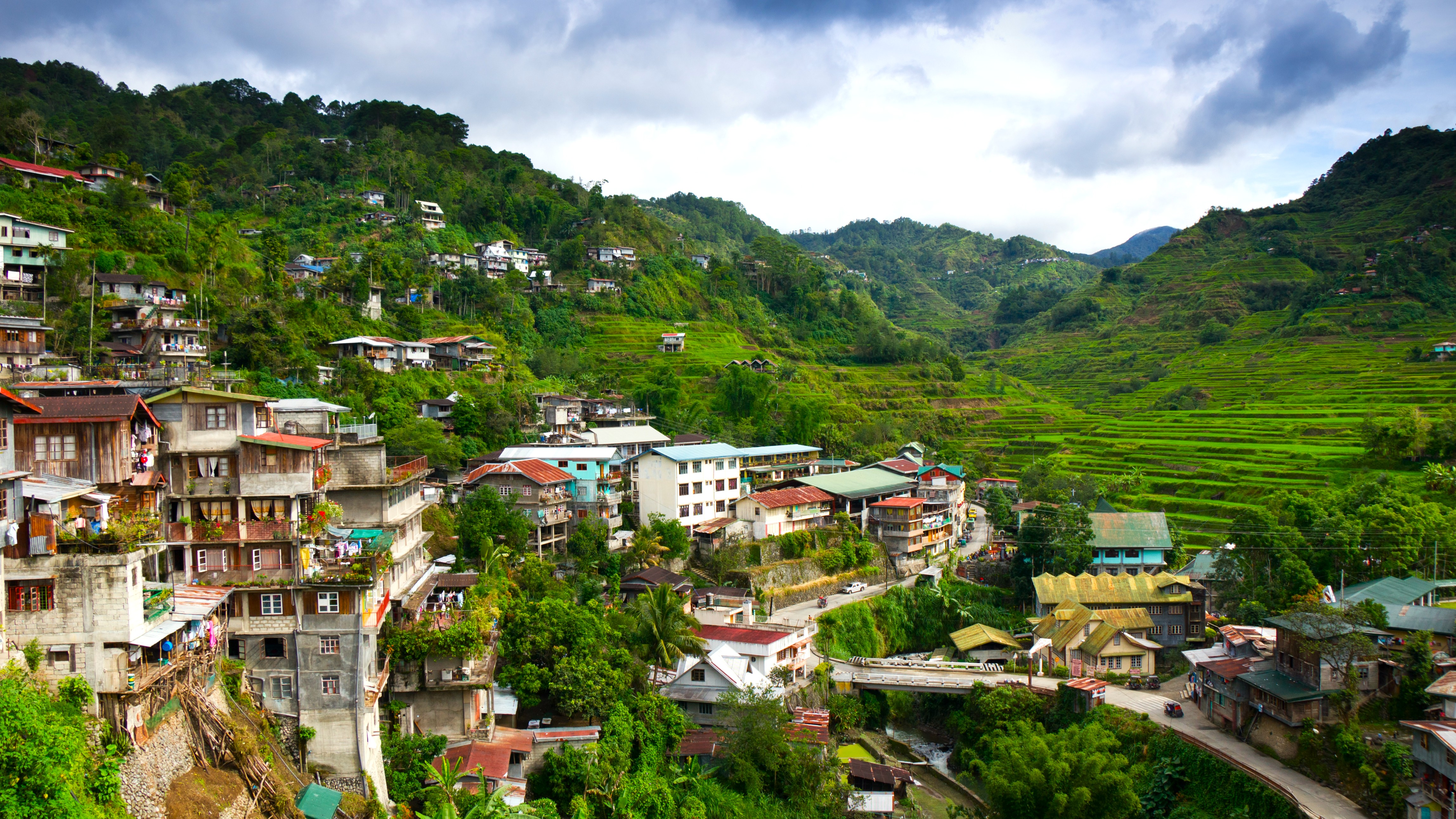
Banaue stands perched in the highlands of Ifugao province, near the Mount Amuyao massif. This destination draws visitors primarily for its rice terraces. Your day lends itself to varied experiences such as a pause at Guihob Natural Pool, a moment of relaxation in the hot springs of Ducligan, or a visit with the artisans of Matanglag Bronze Smiths and Nuntamangan Village. A brief tour of the town.
Etymology
The name "Banaue" likely originates from the Ifugao language, spoken in the Cordillera region of the Philippines. According to certain hypotheses, it may derive from the Tagalog word "banaw," a fruit very present in the region, or from "banawe," which means woman or girl. Other interpretations associate it with local terms designating a high place or terrain dedicated to rice cultivation.
Banaue's Geography
Banaue is located 340 kilometers from Manila, in the heart of Ifugao's mountains. This municipality is home to just over 20,000 residents spread across 191 km². This corresponds to a population density of 110 inhabitants per square kilometer. Altitude ranges from 481 meters in the lower zones to 2,689 meters at the highest point.
Discovering Banaue
Explore the Rice Terraces
Banaue's rice terraces are inscribed on UNESCO's World Heritage list. These verdant tiers stretch across hundreds of kilometers and rise to 1,500 meters. From the various viewpoints, let your eyes follow the meticulous work of the Ifugao, who have cultivated these lands for millennia. The ancestral irrigation systems still function and offer a fascinating glimpse into the ingenuity of this people.
Visit the Cultural Village of Tam-An
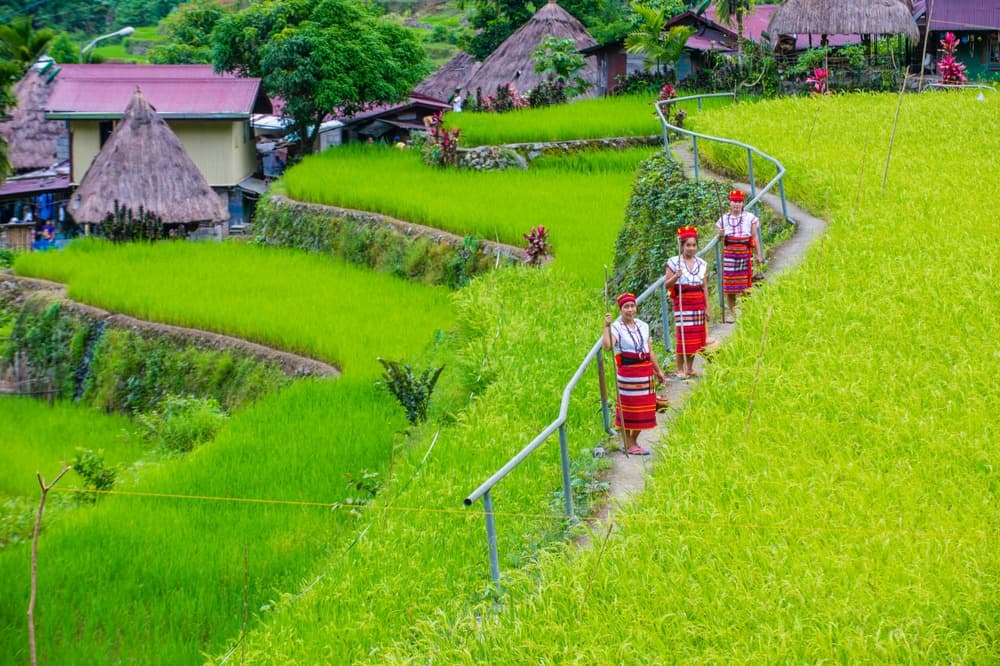
Descend a few minutes from your hotel to discover Tam-An. This is a village where the traditional life of the Ifugao continues to pass from generation to generation. Constructed from Amugawan wood, the "nail-free" houses stand alongside sculpture and weaving workshops. Souvenir stalls display unique local creations, and each house tells, through its sculptures and motifs, the story of this community.
A Cool Escape at Tappiyah and Chappah Waterfalls
For a nature excursion, hike to Chappah Falls in the barangay of Bocos. The walk takes about an hour and offers panoramic views of the town and terraces. Tappiyah Falls, in Batad, harbors a natural pool where you can cool off and enjoy a picnic.
Visit the Cordillera Museum
1.8 km from the town center, the Cordillera Museum houses over a thousand traditional objects. Accessible in 10 minutes by tricycle, it allows you to understand the beliefs, craftsmanship and history of the Ifugao people and appreciate the cultural heritage of this region.
Discover the Village of Batad
Batad stands out for its amphitheater-style rice terraces and preserved atmosphere. The language and ancestral rituals of its inhabitants are still practiced. While there, you can:
- walk the trails through the heart of the terraces and observe nature,
- climb Mount Amuyao or reach the Awa viewpoint for unforgettable vistas,
- stay in a traditional Ifugao hut,
- taste local coffee and rice wine,
- attend a campfire and listen to the village's stories and legends,
- savor local specialties such as pinikpikan,
- observe artisans at work and support the community,
- trek toward Kinakin and Cambulo,
- admire the sunset from a panoramic terrace.
Climate
Banaue enjoys a tropical mountain climate, marked by cool temperatures and moderate humidity throughout the year. Located at approximately 1,500 meters elevation, the town remains cooler than the Philippines' lowlands, with averages ranging between 15°C and 25°C.
The region experiences two distinct seasons:
- Rainy season (May to October): showers are frequent and sometimes intense, particularly during typhoons.
- Dry season (November to April): weather is more stable, rainfall is rare, and days remain pleasant for exploring the surrounding landscapes and villages.
The Best Time to Visit Banaue
The best times to discover Banaue fall between April and May, then October to November. During these periods, the rice terraces reveal their full intensity of green and compose landscapes that capture the eye.
Avoid planning your visit during the rainy season, in July and August. Rainfall can make certain areas slippery and complicate hiking or trekking.
From Manila
The bus is the simplest way to reach Banaue from Manila. Expect approximately 9 hours of travel depending on traffic. Most travelers depart at night to arrive early the next morning.
You can choose Ohayami Bus Transit, at the corner of Fajardo Street and Lacson Avenue in Sampaloc, with daily departures at 9 p.m. Online reservation is available. Based in Cubao, Dangwa Transit offers one daily departure to Banaue. Arrive early as seats are allocated on a first-come, first-served basis. Departure is scheduled for 8 p.m.
From Baguio
The journey to Banaue takes approximately 3 hours, including connections. Multiple departures are available each day. You can board with Ohayami Bus Transit, near Burnham Park, or KMS, with two daily routes departing from Rizal Park.
From Sagada
From Sagada, leave early to make the most of your day. Jeepneys connect the town hall to Bontoc starting at 6:30 a.m. Departures run every half hour until 1 p.m. In Bontoc, take a local bus or van to Banaue. The journey takes approximately 2 hours, with departures at 7:00 a.m., 8:30 a.m., 10:00 a.m., and 1:00 p.m.
Want to discover this destination?
Our local advisors design your tailor-made trip.