Ifugao Province
Ifugao Province
Ifugao Province, nestled in the Cordillera Mountains of Luzon, is home to the stunning rice terraces of Banaue and Batad, inscribed as a UNESCO World Heritage site. This mountainous territory preserves living Ifugao culture—ancient rituals, woodcarving, and ancestral farming practices that span over two millennia.
Ifugao Province, in the Cordillera Mountains of Luzon, is the ancestral homeland of the Ifugao people. It harbors the celebrated rice terraces of Banaue and Batad, inscribed on the UNESCO World Heritage List. Here, ritual agriculture, woodcarving, and oral traditions form a living cultural ensemble, transmitted for over two thousand years across a spectacular mountainous landscape.
Practical Information at a Glance
- Access from Manila: overnight buses from Cubao Bus Terminal (Quezon City) to Banaue—approximately 8 to 9 hours' drive.
- Recommended season: dry season from November to April; terraces are lush green from June to August (rainy season, though roads can become impassable).
- Suggested duration: 2 to 4 days to combine Banaue, Batad, and Hapao.
- Dress code: lightweight but modest clothing for villages; sturdy hiking boots essential on terraced trails.
- Local guides: highly recommended—they support community economies and know the trails intimately.
- Altitude: Banaue sits at approximately 1,200 meters; bring an extra layer for cool nights.
What You'll See
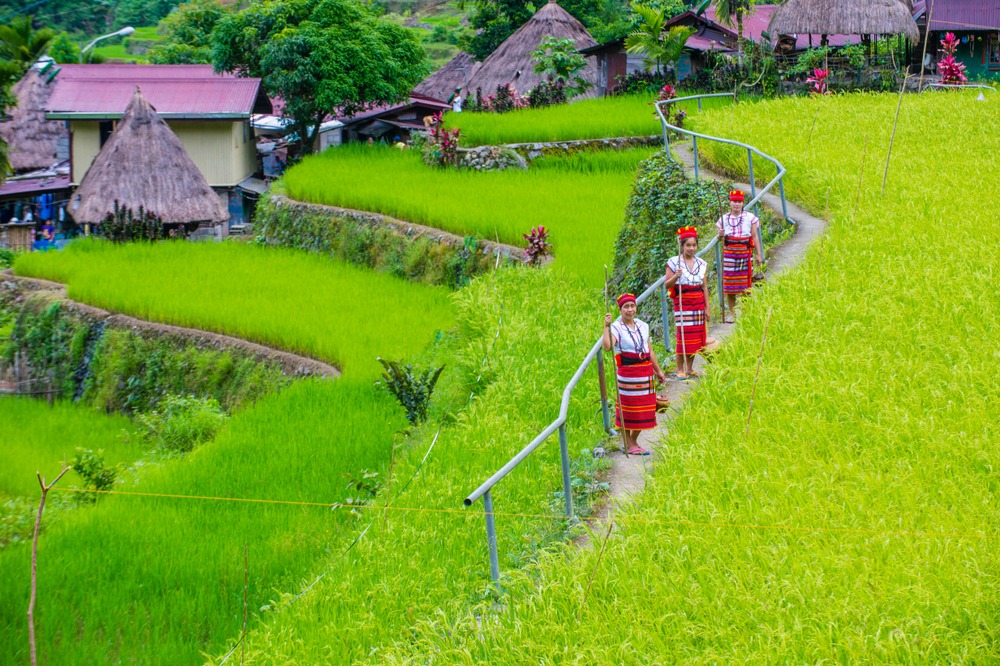
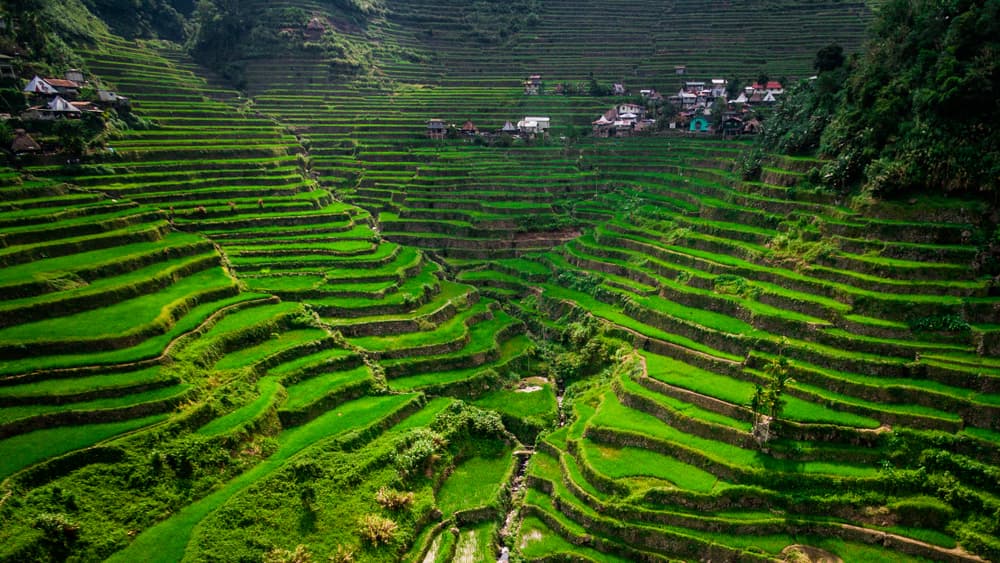
Step-like terraces sculpt the mountainsides across hundreds of meters of elevation change. Each stone wall retains water and soil, forming a complex irrigation system entirely managed by local communities. Traditional villages—homes with distinctive thatch roofs shaped like wide-brimmed hats—dot the ridges. Local markets showcase carvings, weavings, and wicker baskets characteristic of Ifugao craftsmanship.
History and Context
The Ifugao terraces were built some 2,000 years ago by Ifugao ancestors, entirely without external technology. Inscribed as a UNESCO World Heritage site in 1995, they are recognized locally as the "eighth wonder of the world." Spanish colonization never fully penetrated these mountains, allowing Ifugao traditions—rituals, customary law, and epic oral narratives—to endure to this day.
Highlights of Your Visit
Banaue Viewpoint
The main overlook, a few kilometers from Banaue town center, offers a panoramic view of the tiered terraces. It's the classic starting point, accessible by jeepney or on foot from town.
Batad and Its Amphitheater of Terraces
The village of Batad, reachable only on foot from the mountain saddle (roughly 45 minutes' hike), is surrounded by amphitheater-shaped terraces. Tappiyah Waterfall, 25 minutes from the village, invites swimming in an isolated setting.
Hapao and Hungduan
These terraces, less frequented, are separately listed by UNESCO. Hapao combines rice paddies with nearby natural hot springs.
Banaue Market and Ifugao Craftsmanship
Ifugao carvers are celebrated for their wooden bulul figurines (rice guardians). Shops and workshops in town allow you to watch artisans at work and purchase directly from them.
Etiquette and Visiting Guidelines
- Always ask permission before photographing residents or rituals.
- Do not walk on the terrace walls—they are fragile, and their upkeep is constant community labor.
- Respect sacred areas marked in villages; some rituals are closed to outside visitors.
- Engaging a certified local guide is expected practice and directly supports Ifugao families.
Photography Tips
Golden light early in the morning (before 8 a.m.) and late afternoon reveals the terraces' relief. The rainy season (June–August) offers intensely green paddies, though mist can obscure views. At Batad, position yourself on the village heights to frame the full amphitheater. Avoid flash during ceremonies.
Location and Access
Ifugao is a remote province within the Cordillera Administrative Region (CAR) in northern Luzon. Banaue, the de facto hub for visitors, is connected to Manila by overnight bus. From Baguio, buses and vans also serve the region. Mountain roads are winding; jeepneys and tricycles handle local transport between villages. Wheelchair accessibility on terraced trails is extremely limited.
Nearby Attractions
- Banaue — Ifugao's central town and the launch point for all terrace excursions.
- Batad — remote village with amphitheater-shaped terraces and Tappiyah Waterfall.
- Sagada — neighboring village in Mountain Province, famed for its caves and hanging coffins.
- Baguio — capital of the Cordillera, several hours away, offering craft markets and cool climate.
- Kalinga Province — to the north, home to traditional Kalinga tattoo artisans.
Frequently asked questions
The dry season, from November to April, ensures passable roads and clear views. From June to August, terraces are verdant but rains can make trails slippery and mountain roads challenging.
A local guide is not mandatory everywhere, but highly recommended, especially for Batad and remote villages. Guides know the trails, speak local languages, and their fees directly benefit Ifugao communities.
Yes. Sagada (in Mountain Province) is reachable from Banaue via mountain road. Allow one day for travel between the two. Many travelers loop Manila–Banaue–Sagada–Baguio–Manila over a week.
Wheelchair accessibility is severely limited. Trails are steep and unmaintained. Banaue's viewpoint, reachable by vehicle, remains the only practical option requiring minimal walking.
Always seek permission beforehand. Some rituals are closed to visitors or prohibit photography. Respecting these boundaries is essential to maintaining trust between Ifugao communities and travelers.
Two days suffice to see Banaue and Batad. Four days offer time to explore Hapao, Hungduan, and less-visited villages, with longer hikes between sites.
Want to discover this destination?
Our local advisors design your tailor-made trip.