Apo Island
Apo Island
A pioneering marine sanctuary off Dumaguete, Apo Island brings together pristine reefs, green sea turtles, and a unique conservation story in the Philippines.
Whether with family or friends, embark on an adventure to Apo Island. This is indeed a small volcanic islet located off the coast of Dumaguete. Slip on your mask and snorkel to explore the coral reefs and observe sea turtles moving through their natural habitat. Set your course for Negros Oriental province!
History
The recent history of this island takes a decisive turn in 1982. At that time, marine biologist Dr. Angel Alcala from the marine laboratory at Silliman University engaged in direct dialogue with the island's residents and fishermen. He presented to them the value of marine sanctuaries and the lasting benefits such an initiative could bring to their environment and livelihoods.
With the scientific support of Silliman University's marine laboratory, the local community selected a precise area to establish the sanctuary's foundation. The Apo experiment quickly became a reference point. Its success inspired the creation of hundreds of marine sanctuaries throughout the Philippines, making the island a model for participatory management and protection of marine ecosystems.
Today, the waters surrounding the island benefit from a strengthened legal framework thanks to the National Integrated Protected Areas Law (NIPA). Management falls under the Protected Area Management Board (PAMB), the guardian of site preservation. In 2023, the Marine Conservation Philippines organization also participates in the advisory committee for the Apo pier construction project, continuing collective commitment to protecting the island and its natural heritage.
Apo Island at a Glance
The island is located 7 kilometers from the southeastern tip of Negros and 30 kilometers south of Dumaguete, capital of Negros Oriental, facing the municipality of Zamboanguita. Its name "Apo" means "elder" or "respected ancestor" in Visayan, reflecting its cultural importance to the region's inhabitants.
The Underwater Wonders of Apo Island
Meeting the Sea Turtles
Visit Apo Island for an experience that leaves a lasting impression, particularly observing sea turtles. Around the island, their presence is constant, making encounters frequent, especially during snorkeling outings.
Spend time in the water and increase your chances of spotting them around the reefs. Within just a few hours of snorkeling, it's not uncommon to see several, sometimes interacting with one another.
Listen to explanations from local guides to better understand the species present. Apo's waters welcome mainly the green sea turtle, which is highly prevalent in the marine reserve near the main beach, as well as the hawksbill turtle.
A Diversity of Tropical Fish
In these waters, you may also encounter bigeye trevally, humphead wrasse, manta rays, as well as hammerhead sharks or tuna, depending on the areas and timing.
What to Do?
Discover the Seabed Through Snorkeling
Begin as soon as you arrive. Facing the landing point, enter directly into a marine conservation zone rich in coral and frequented by turtles. Slip on your mask and snorkel to explore alone or choose a local guide to better spot wildlife and understand the environment.
Opt for a guided outing including complete equipment, offered at around 300 pesos per person. Simply indicate your wish to return later to organize multiple outings.
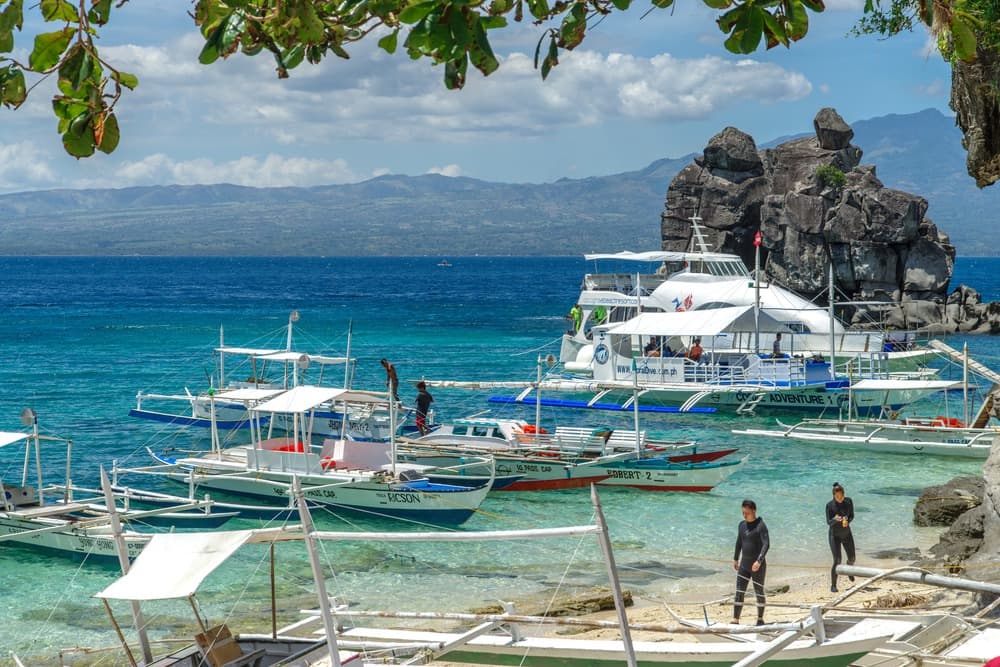
To expand your route, rent a boat from local fishermen and explore the reefs surrounding the entire island.
Scuba Dive Around the Island
Contact the diving centers located on the island if you hold a certification. Book an outing and access sites recognized for the quality of their reefs and marine life diversity. Even without diving, observe the condition of the corals from the surface to gauge the potential of the seabed.
Walk Around the Island
Leave the shoreline and walk around the island. Follow the coastal path and reach the small lighthouse situated about one kilometer north of the main village. Climb nearly 200 steps and enjoy expansive views over the sea and reefs.
Continue south to discover a few lagoons, then proceed to the other side of the island. Advance along paths sometimes used by locals. Don't hesitate to ask for directions if needed. End your walk facing the village and observe the activity of the fishermen.
Climate
When visiting the island, expect typical tropical weather, shaped by the sea and seasonal winds. From December to February, the island enjoys milder conditions, often accompanied by a breeze from the northeast. These months offer pleasant conditions to explore and spend time in the water without intense heat.
From May onward, the heat becomes more pronounced and humidity increases. The southwest monsoon brings more regular rainfall, extending through November. January is generally the coolest month, while May stands out as the hottest of the year.
Starting Point: Dumaguete
Begin your journey from Dumaguete. It's the simplest departure point to reach the island. Travel independently and easily organize the different stages. You can also choose Dauin, located south of Dumaguete. It's closer to the departure port.
Reach Dumaguete by direct flight from Manila or Cebu, or opt for the ferry from Siquijor if you're already in the region.
Reach Malapatay Port
From Dumaguete, head to the Ceres Bus Terminal in the city center. Take a tricycle. Expect 10 to 15 minutes from most neighborhoods for a modest fare. If arriving directly from the airport, plan for a slightly higher cost.
Then board a bus heading south and get off at the Malapatay market. Inform the driver of your destination when boarding to avoid confusion. Buses run regularly and the journey takes about 40 minutes.
Upon arrival, walk through the market for a few minutes to reach the main road. Depending on the day, activity may vary, but you'll always find something to eat or buy a beverage nearby.
Board for Apo Island
Present yourself at the information point upon arrival. A staff member will then indicate the next departure or the boat to join.
Leave early in the morning to share the crossing with other travelers and keep costs down. The earlier you arrive, the easier it is to form a group.
Expect 300 to 500 pesos per person for a shared boat, depending on the number of passengers. For a private crossing, plan for a higher budget. A port access fee is also required.
Settle aboard for a crossing of approximately 30 minutes, arriving on the island's west coast, near the village.
Want to discover this destination?
Our local advisors design your tailor-made trip.