Palawan
Palawan
From the underground river of Puerto Princesa to the lagoons of El Nido, passing through the wrecks of Coron: everything you need to know to plan Palawan.
Often ranked among the most beautiful islands in Southeast Asia, Palawan has far more to offer than simply picture-perfect landscapes. It reveals itself through boat journeys, sometimes bumpy trails, and impromptu conversations in barangays. Waiting for a boat, listening to a fisherman share his daily life, or dining facing the ocean—these are simple yet precious moments that truly shape the experience.
A glimpse into Palawan's history
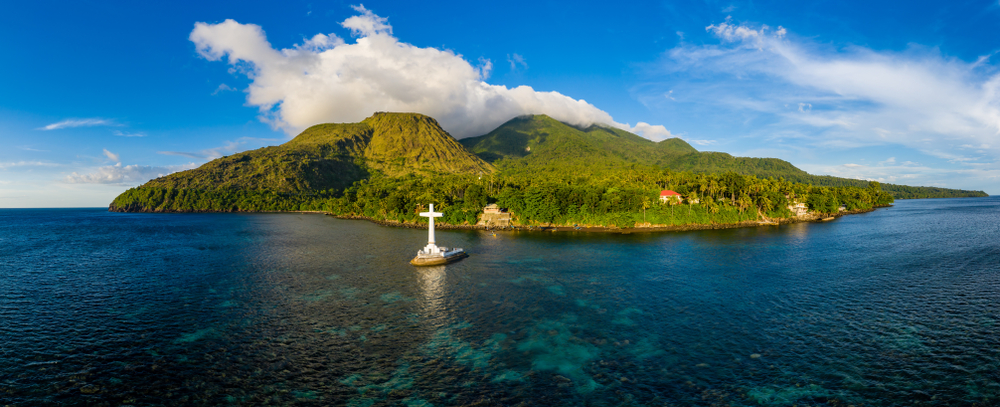
Before becoming a coveted traveler's destination, Palawan lived through significant historical chapters. The Spanish arrived in the late 19th century, marking the beginning of a European presence. But it was World War II that left the most visible traces. Occupied by Japanese forces, the island witnessed intense combat until its liberation by American troops in 1945. Several Japanese naval vessels sunk during this period still rest at the bottom of the waters, notably near the islands of Coron and Busuanga.
A brief geography
Situated between the South China Sea and the Sulu Sea, this destination forms a vast insular province comprising 1,790 islands and islets, with the main island stretching 450 km long and roughly 50 km wide. With an area of approximately 14,900 km², it ranks among the Philippines' largest islands and belongs to the administrative region of Mimaropa (Region IV-B). Despite its size, the province remains sparsely populated, with just over 400,000 inhabitants scattered across an elongated territory that remains largely unspoiled. Several indigenous groups still live here—the Bataks, Tagbanwa, Palawans, and Tau't Batu. Each is anchored in distinct regions, often isolated by terrain or forest.
Mount Mantalingajan, which peaks at 2,085 meters, is its highest point. The territory encompasses several archipelagos, notably the Calamian, Linapacan, Quiniluban, Cuyo, Dumaran, Balabac, and Cagayan.
In 2019, legislation proposed dividing the province into three entities:
- North Palawan (capital Taytay)
- East Palawan (capital Roxas)
- South Palawan (capital Brooke's Point)
Spectacular biodiversity in Palawan
Local biodiversity isn't merely scenery—it's genuine terrain for discovery. Keep your eyes open during any outing. You might spot a pangolin in the forest, glimpse an endemic wild boar, or watch a freshwater turtle slip into the marshlands. Certain species, like the Philippine cockatoo, exist nowhere else on Earth.
A bit further along, all you need to do is glance around to notice a gecko clinging to a trunk, a giant butterfly, or an uncommon spider.
And if you climb the slopes of Mount Victoria, you may just discover a carnivorous plant found nowhere else in the world.
What to do?
Wander through the jungle
If you love movement, Palawan will give you plenty of reasons to venture off the beaten path. Nearly half of its primary forests remain untouched. You can hike for hours, observe local wildlife, and immerse yourself in an environment still largely untransformed. Animals like monitor lizards, binturongs, and primates still thrive here in harmony.
Waterfall enthusiasts won't be disappointed either. The island boasts hundreds of them, some remote, some accessible. Estrella Falls, in the south, spans 64 levels—it takes several days to traverse them all.
If you're into birds, there's plenty to keep you engaged. The Palawan hornbill and Philippine cockatoo attract birdwatchers from around the world. And if you're up for a challenge, several peaks are open for trekking, with routes suited to different levels.
Relaxation on Palawan's beaches
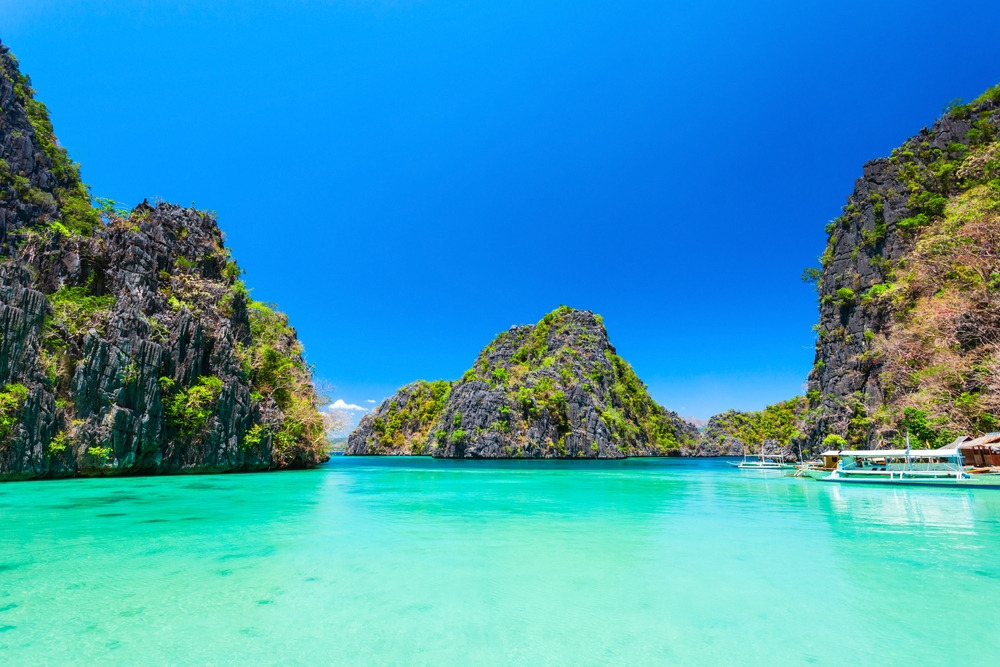
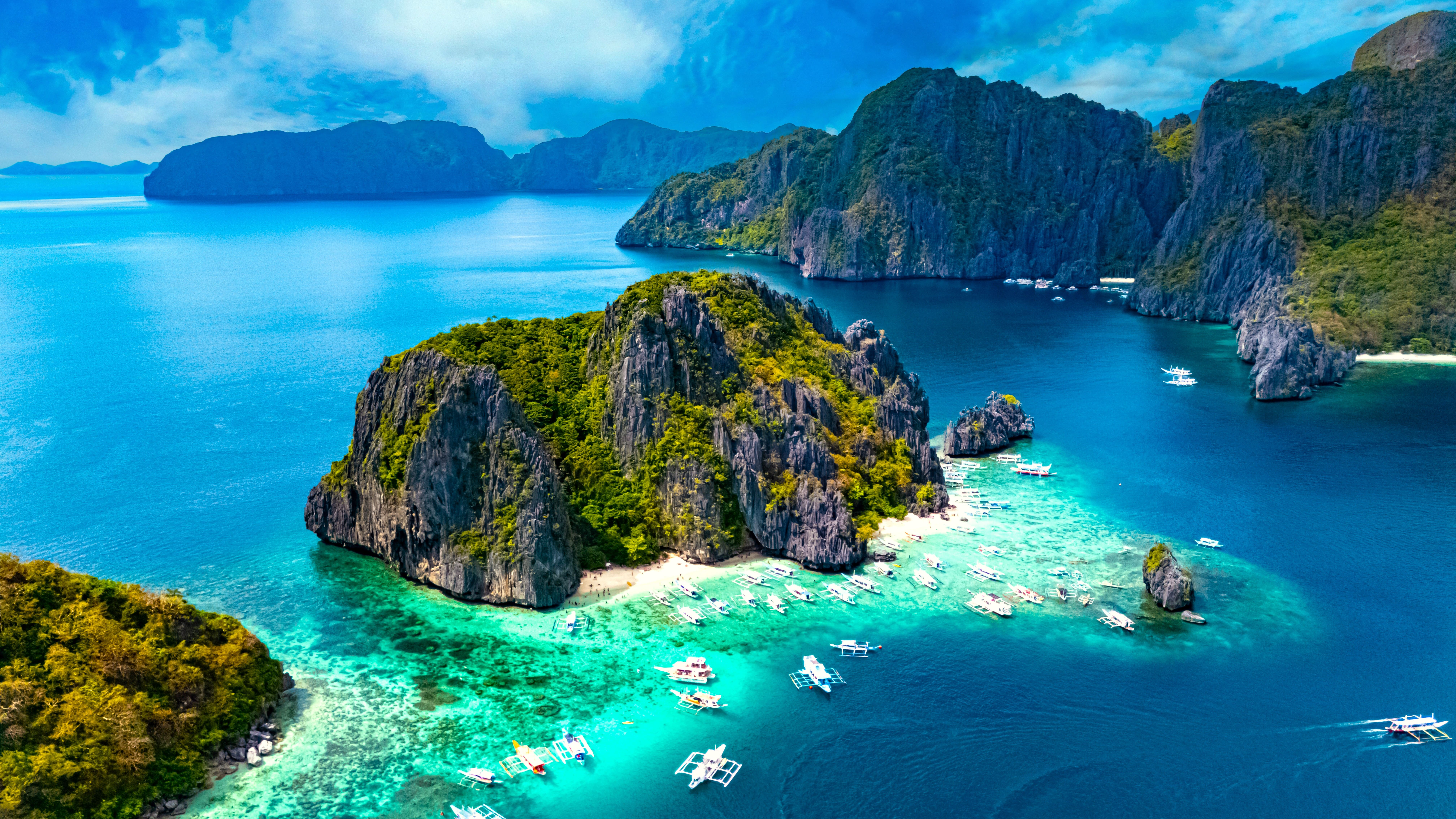
One of the great pleasures here is discovering tranquil beaches. If you start in El Nido, don't miss excursions to the Bacuit archipelago. You'll find isolated coves, accessible only by boat, perfect for swimming, snorkeling, and unwinding.
Continuing north, the road leads to Nacpan Beach. It's a spacious stretch of light sand, still relatively undeveloped, extending nearly 3 km and offering a lovely vantage point for sunset.
Further south, Long Beach at San Vicente opens onto the ocean with a wilder backdrop and a peaceful atmosphere.
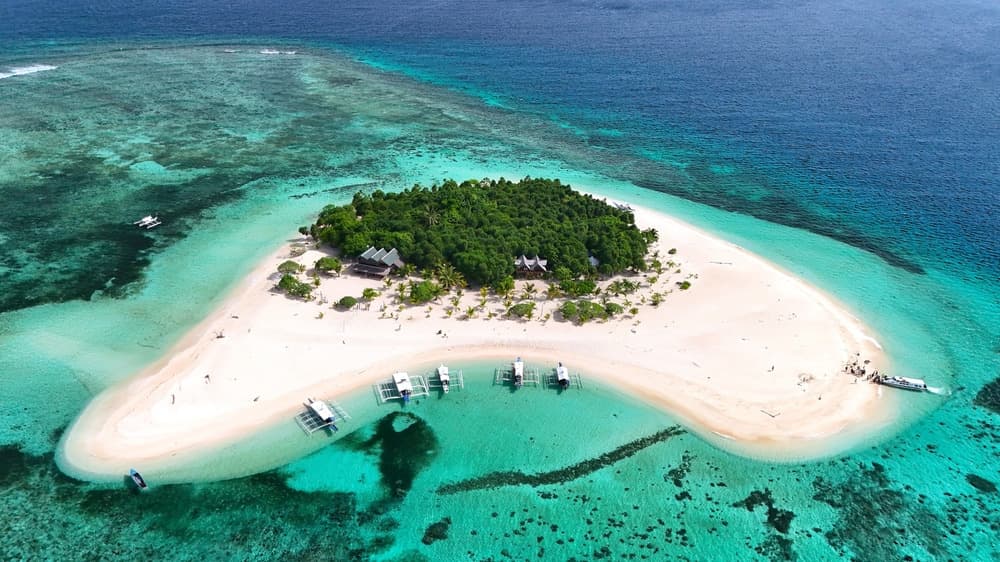
And if you want to explore further afield, head to the Calamian Islands in the far north. These islets are surrounded by turquoise waters and beaches ideal for a day of escape.
Snorkeling and diving
If you love exploring underwater, Palawan is a destination not to miss. The region is part of the Coral Triangle, renowned for its marine richness. Among the most prestigious sites is Tubbataha Reefs National Marine Park. Accessible only by liveaboard cruise between March and June, it sits in the middle of the Sulu Sea and caters mainly to experienced divers. Expect remarkable fish diversity, sharks, rays, and pristine coral.
In the north, the Calamian Islands are ideal for combining nature and history. At Coron, several Japanese wrecks from World War II rest beneath the surface, and some can even be explored via snorkeling.
Around El Nido, Busuanga, or the Linapacan archipelago, you'll find stunning reefs accessible with fins and mask. The water is clear, and boat outings are easy to arrange.
Venture out in a sea kayak
To break from conventional motorboat tours, explore Palawan's bays by sea kayak. This option lets you discover the landscape freely, taking time to observe your surroundings.
Around Busuanga, several operators organize multi-day outings. You paddle between small sheltered islands, camp on quiet beaches, and if you wish, fish for dinner.
Longer itineraries also exist, including a roughly two-week crossing between Busuanga and El Nido for the truly ambitious.
When to visit Palawan?
The best time to go is between December and April. During these months, the climate is drier, days are sunny, and conditions are ideal for boat excursions or hiking. Temperatures hover around 25 to 30°C, with pleasantly warm seas around 27 to 28°C.
By air
To reach Palawan, take a domestic flight from Manila, Cebu, or Clark. Two main airports welcome you: Puerto Princesa, in the island's center, and Busuanga, in the north, for access to Coron and the Calamian Islands. Both airports are served by most Philippine airlines.
If you're heading to El Nido, you can also land directly at the private Lio Airport, used exclusively by Air Swift. It's convenient but pricier with limited flights. The most common solution remains arriving in Puerto Princesa, then continuing by road (van or bus) toward the island's north.
Finally, Air Juan offers some flights in small aircraft or seaplanes between Palawan and other destinations like Boracay.
By ferry
If you prefer sea travel, several options are available. Regular ferries connect Manila to Puerto Princesa and Coron. There's also service to El Nido, though departures are less frequent.
Another maritime line links Puerto Princesa to Iloilo, passing through the more isolated Cuyo Islands. These crossings run only twice weekly, and schedules may vary.
From Mindoro, board a bangka (local boat) between San José and Coron.
Want to discover this destination?
Our local advisors design your tailor-made trip.