Manila
Manila
A sprawling capital on the shores of Manila Bay, Manila blends the cobblestone streets of Intramuros, the skyscrapers of Makati, and the vibrant markets of Binondo. Our complete guide.
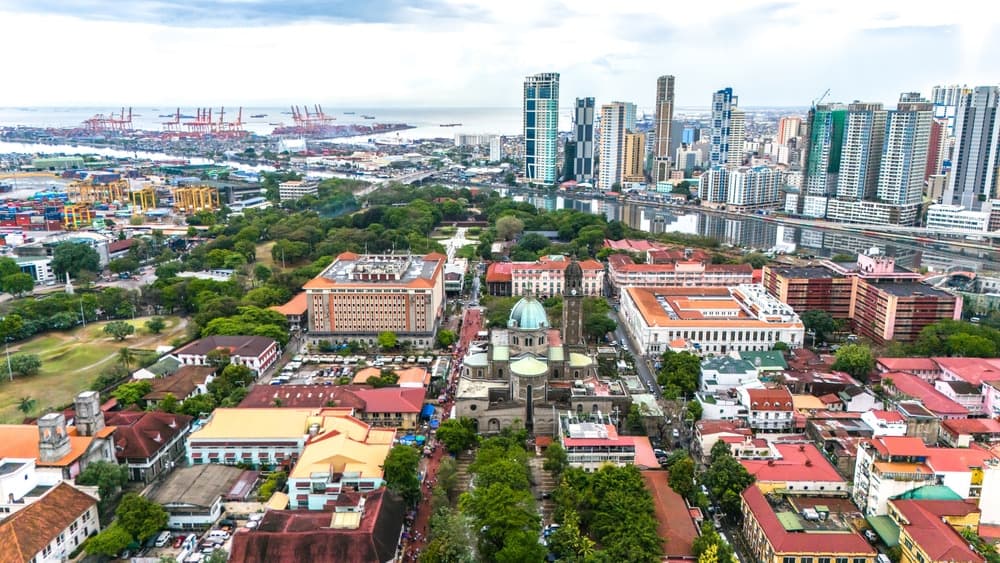
Set your sights on the capital of the Philippines! Manila stretches along the coast of Manila Bay, offering a wealth of experiences: strolls through historic quarters like Intramuros, museum visits tracing its past, culinary discoveries with varied flavors, and bustling markets brimming with local produce and artisanal crafts. It combines dynamic urban zones with green spaces, exemplified by Rizal Park. Welcome to the nation's metropolis!
Etymology
The name "Manila" comes from the Spanish word "Manila," derived from the Tagalog term "Maynila." In Tagalog, "may" means "provided with" or "characterized by," and "nila" refers to a type of mango tree.
History
Manila existed long before the Spanish arrived in the 16th century. At that time, it was called Maynilad, after a mangrove plant. It was a fortified Muslim settlement located at the mouth of the Pasig River, governed by a chief who collected taxes on commerce. In 1571, Miguel López de Legazpi, the first Spanish governor, took control of the site, destroyed the settlement, and founded the fortified city of Intramuros. This zone became the center of colonial power. Around the ramparts, several villages arose, organized around market squares and churches, marking Spanish influence. The city gradually expanded beyond its walls, stretching north, east, and south. In 1975, the Metro Manila metropolitan region was created, uniting 17 cities and several million inhabitants.
Discovering the Philippine Capital
Capital of the Philippines, Manila sits on the western coast of Luzon island, along the bay of the same name, approximately 1,300 km from mainland Asia. Traversed by the Pasig River, the city connects Laguna de Bay lake to the southeast with Manila Bay. Much of its territory rests on alluvial soils brought by the river. Land reclaimed from the sea has been modified by human activity, especially near the coast. Urbanization has also leveled certain topographical differences.
With nearly 1.8 million inhabitants concentrated on fewer than 40 km², it ranks among the world's most densely populated cities and is part of the Metro Manila agglomeration. Administratively, the city comprises 897 barangays, grouped into 100 zones, themselves distributed across 16 districts and six electoral districts.
It consists of varied neighborhoods such as Intramuros, Binondo, and Malate. Here you'll discover bustling markets, shopping centers, historic sites, and Malacañan Palace, the official residence of the president. Despite the hustle and density, the city reveals a rich heritage well worth exploring.
What to Do?
Take a Tour of the Old City of Intramuros
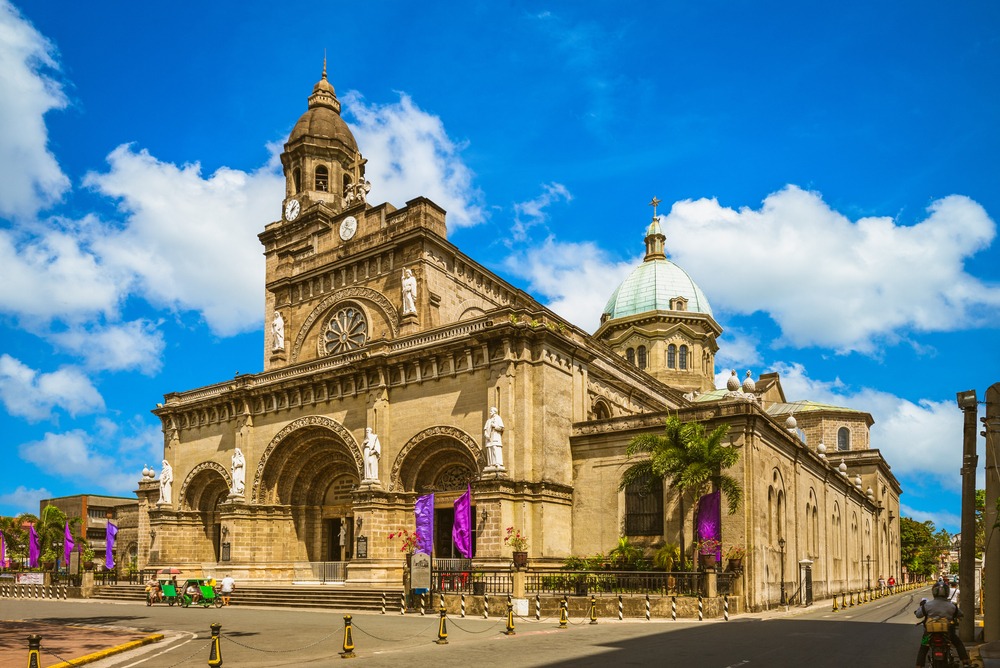
To discover the history of this city, start by visiting Intramuros, known as the fortified old town. This neighborhood is home to important sites such as Fort Santiago, the San Agustin Church, and Manila Cathedral. Wander on foot through its cobblestone streets, rent a bamboo tricycle to soak in the exceptional atmosphere of the place.
It's an ideal visit for a half-day. It's easily accessible from the city center or port. It appeals equally to history enthusiasts and curious visitors.
Explore Cultural and Educational Attractions
Visit the National Museums complex near Rizal Park to discover art, anthropology, natural history, and a planetarium. The Philippine Biodome showcases local biodiversity and sustainable development. In Taguig, the Mind Museum offers interactive scientific exhibitions suited for children. Manila Ocean Park features aquariums, sea lion shows, and an underwater tunnel. These venues are perfect for a half-day visit from the cruise port.
A Gastronomic Journey Through the Streets of Binondo
Discover Binondo, Manila's historic Chinatown, where flavors mingle in vibrant streets. Following Ongpin Street, you'll find dumplings, lumpia, pork chops, and other specialties to savor as you stroll.
Located not far from Intramuros, the National Museum, and the port, it offers a tasty pause, ideal for passing visitors, particularly cruise arrivals.
Shop at Shopping Malls and Markets
Here, shopping comes in many styles. SM Mall of Asia in Pasay houses numerous shops, leisure spaces, and a promenade along the bay, plus a large IKEA. In Taguig, Bonifacio High Street invites outdoor shopping while enjoying restaurants. For more affordable buys, Divisoria and Greenhills in San Juan are known for clothing, gadgets, and souvenirs.
Enjoy Evenings in Poblacion
In Makati City, Poblacion is the ideal neighborhood to experience Manila's nightlife. You'll find rooftop bars, cozy pubs, and more intimate bars along lively streets. On weekends, street parties offer the chance to hop between multiple bars in a single evening.
Climate
This major capital inherits a tropical monsoon climate, close to tropical savanna conditions. Located near the equator, it remains warm year-round, with temperatures rarely exceeding 39 °C and seldom dropping below 19 °C at night.
Humidity is high, often making the air feel heavier and warmer.
The city experiences two distinct seasons: a dry period from late December to early April, followed by a longer rainy season. During this rainy season, rain falls mostly in short, intense showers, and daytime temperatures cool slightly while remaining mild at night. Between June and September, Manila may be affected by typhoons, which bring heavy rains and strong winds.
By Taxi
By Jeepney
The jeepney is the most economical and popular mode of transport in the capital. Each vehicle follows a specific route, displayed on its side. To use one, spot a jeepney heading near your destination, then signal the driver to stop. Once aboard, tell him where you want to go. The driver or another passenger will let you know when you've arrived. To get off, simply shout "para!".
By Metro
Metro Manila has two metro lines to facilitate travel. Line 1, the oldest, connects 18 stations running from the north at Monumento to the south at Baclaran. Line 2, more recent, departs from central Manila at Recto and extends eastward across the city. These two lines cover a good portion of the capital and enable rapid travel outside traffic congestion.
Want to discover this destination?
Our local advisors design your tailor-made trip.