El Nido
El Nido
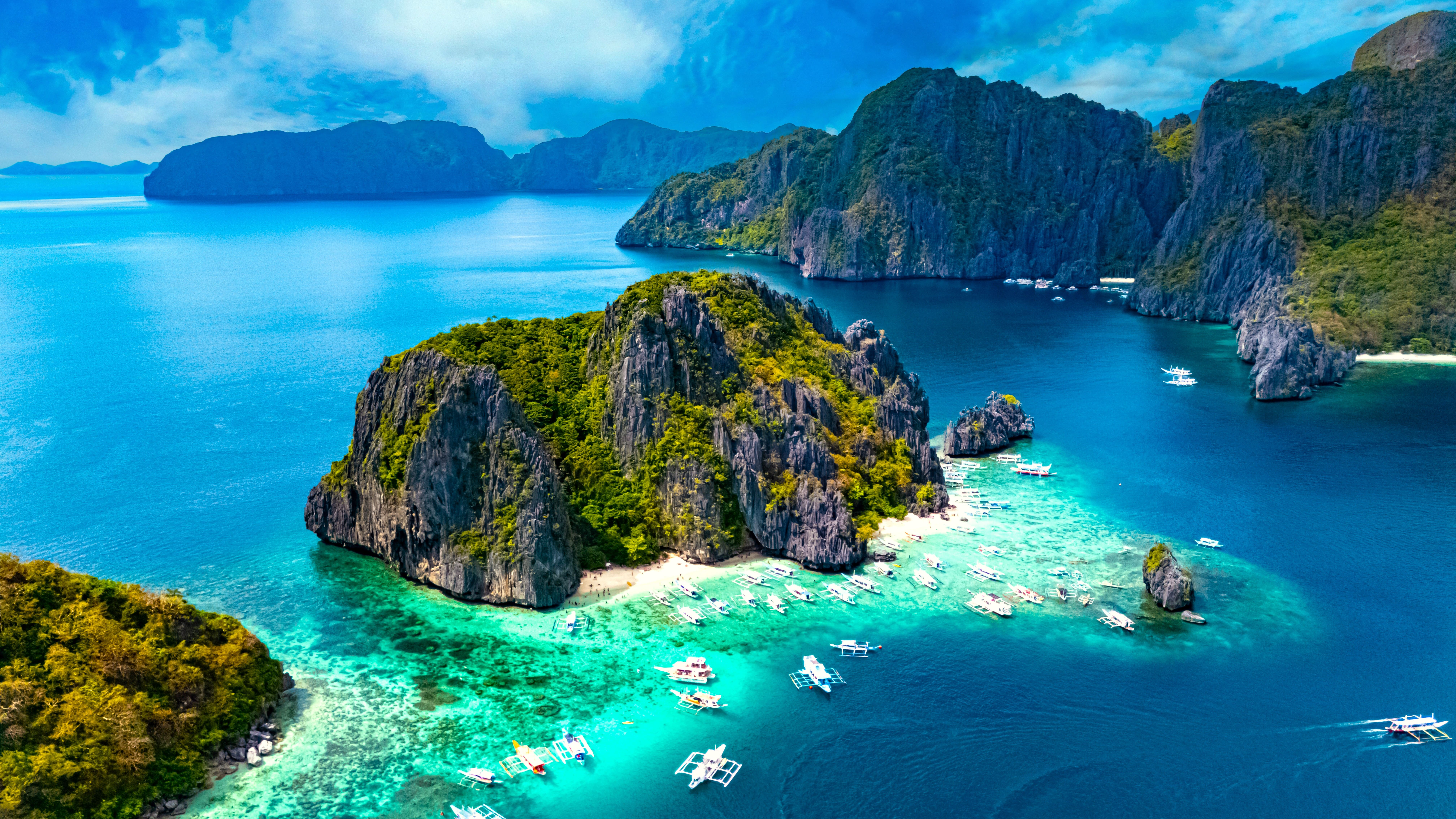
At the northern tip of Palawan, El Nido lines turquoise lagoons, limestone cliffs and white sandy beaches. The departure point for the must-do A, B, C, D tours.
Set your course for the northern tip of Palawan! Welcome to El Nido, a town where adventure and relaxation go hand in hand. Here, snorkeling and kayaking enthusiasts have plenty to keep them busy, while hikes to viewpoints offer a fresh perspective on the bay and its limestone islets. Beyond excursions, you can scale clifftops for sweeping panoramas, savour fresh seafood, or simply watch the sunset with your feet in the sand. Let's dive into this corner of Palawan that deserves your attention.
History
Legend has it that El Nido welcomed inhabitants as early as 2680 BC, perhaps even around 24,000 years ago. Excavations in caves throughout the area, notably at Ille in New Ibajay, reveal fossils and burials dating back to the late Neolithic period. During the Song Dynasty (960–1279), Chinese merchants regularly travelled there to trade precious bird's nests.
Originally, the village was called Talindak and belonged to the Tagbanwa people. In the 16th century, migrants from the Cuyo Islands settled there. In the 19th century, the Spanish established an outpost in what are now the Población and Mabini quarters. They named the village Bacuit in 1890. The same period saw several Chinese families such as Lim, Chin and Liao arriving and settling in Langeblangeban. El Nido fell under the municipality of Taytay until 1916, when it became an independent municipality. In 1954, residents gave the town its current name, inspired by the edible nests of swiftlets tucked into limestone cliffs. These nests are used to prepare bird's nest soup.
A little geography
At the northern tip of Palawan, El Nido awaits, roughly 420 km from Manila and 238 km from Puerto Princesa. This municipality covers nearly 465 km² and is home to more than 36,000 residents. You'll discover 45 islands bordered by the South China Sea to the west and north, and by the Sulu Sea to the east and south. Don't miss Cadlao Island, whose summit reaches 640 metres and offers magnificent vistas.
It sits on the Eurasian Plate, which explains the presence of limestone cliffs, reminiscent of those you might see in Ha Long Bay, Guilin, or Krabi.
Today, a beloved beach town
Today, this coastal town has become a sought-after tourist destination that particularly attracts Filipinos during Holy Week. Discover a lively seafront area where restaurants and hotels line the bay. You'll also find more budget-friendly accommodation set back from the shore.
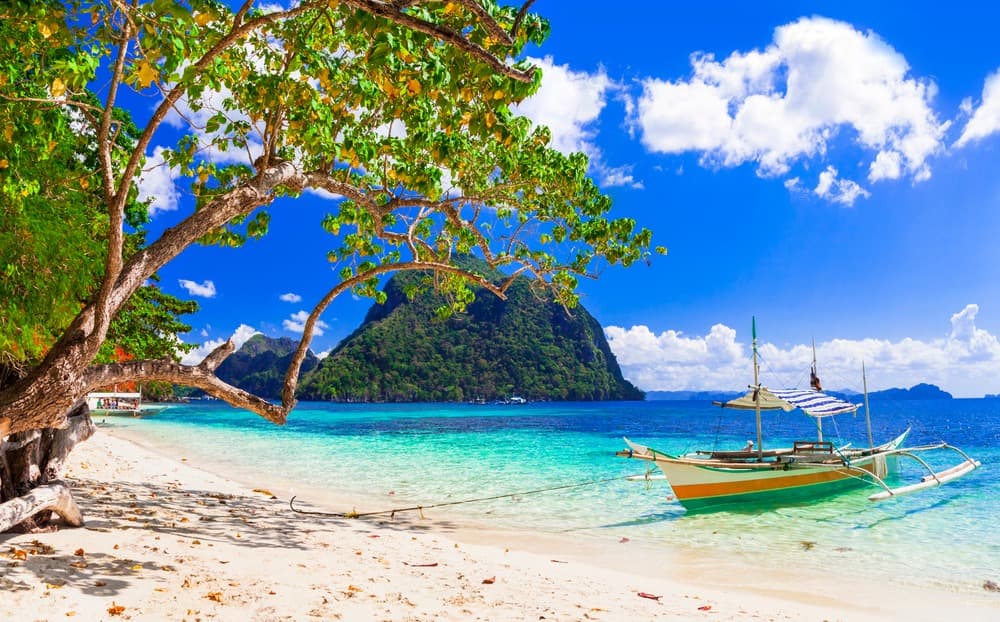
Diving, kayaking and sailing enthusiasts appreciate its crystal-clear waters. Nearby, several coves and lagoons offer beautifully transparent seas.
What to do?
Explore beaches by kayak
For a different way to discover this town, treat yourself to a day of kayaking from Corong-Corong. Paddle along the coast and visit several beaches. Small and unspoilt, Lapuslapos offers an intimate setting perfect for a break.
Papaya Beach gives you the chance to enjoy white sand without encountering crowds.
Finally, stop by 7 Commandos Beach.
You'll even find a volleyball court; simply ask the bar for a ball to improvise a match with the sea as your backdrop.
Explore by scooter
To discover the surroundings, rent a scooter and enjoy complete freedom of movement. In roughly thirty minutes, you'll reach Nacpan Beach, a long stretch of sand where you can easily find a quiet spot to settle. Just twenty minutes from the town centre, Las Cabanas Beach awaits for sunset views over the water. If you want to add an element of adventure, you can also try the nearby zipline and soar above the sea while seeing the landscape from a different angle.
Stroll through El Nido's centre
Take time to walk through El Nido's streets. Even if you're staying outside town, it's worth spending a morning or evening here. You can enjoy breakfast on a bustling street or dine in one of the many restaurants and cafés. It's also a chance to observe local life.
Visit Big Lagoon
When you arrive at Big Lagoon, prepare to be amazed. This lagoon on Miniloc Island envelops you in a fascinating setting, where clear water reflects limestone cliffs that seem to surround and protect you. Whether by kayak or on a private tour, savour every moment, between the light filtering across the rock tops and the vegetation clothing these limestone formations.
Admire the view from Matinloc Shrine
Don't miss Matinloc Island and its shrine, dedicated to Our Lady of Matinloc. Perched at the island's summit, this site offers sweeping views of the surrounding area. You can also visit a small museum that tells the story of the shrine.
Practical information
Climate
El Nido enjoys a warm and humid climate. It experiences two distinct seasons: a dry season from December to May, and a wet season from June to November. April and May tend to be the driest months, while August sees the most frequent rainfall.
Winds blow from the northeast from December to March, sometimes shifting northward in early year. From June to October, winds shift to come from the southwest. April and May are characterised by gentler easterly breezes. Temperatures range from 22°C at night and can reach 33°C during the day, with the coolest temperatures in January.
When to go?
The best time to visit stretches from November to April, with particularly favourable weather between February and April.
Getting there
By plane
From Bohol Island
From Bohol Island, take a direct flight of roughly 1 hour 40 minutes. Book directly on AirSwift's website, which operates this route.
From Manila
From Manila or other islands, fly to Puerto Princesa. These flights are frequent and offer competitive fares. Then allow for a van journey of around five hours to reach El Nido.
By boat from Coron
If you're planning to visit Coron, reach El Nido easily by boat. The crossing takes approximately four hours, though this can vary depending on sea conditions. Departures are daily at noon.
By scooter
Rent a scooter to explore El Nido freely. You can reach more remote beaches, stop wherever you please, and fully enjoy the scenery without being tied to schedules. Rates remain affordable and you'll easily find rental shops in town.
By tricycle
For getting around town or reaching nearby sites, rely on tricycles. These small vehicles take you everywhere, whether to Nacpan Beach, waterfalls, or simply from one restaurant to another. Expect to pay around 15 PHP per person for rides within the centre.
By van transfers
If you prefer more comfort or are travelling in a group, opt for van transfers. These services operate on fixed schedules and connect the main tourist sites. Remember to book the day before for peace of mind and to best organise your day.
Want to discover this destination?
Our local advisors design your tailor-made trip.