Baguio
Baguio
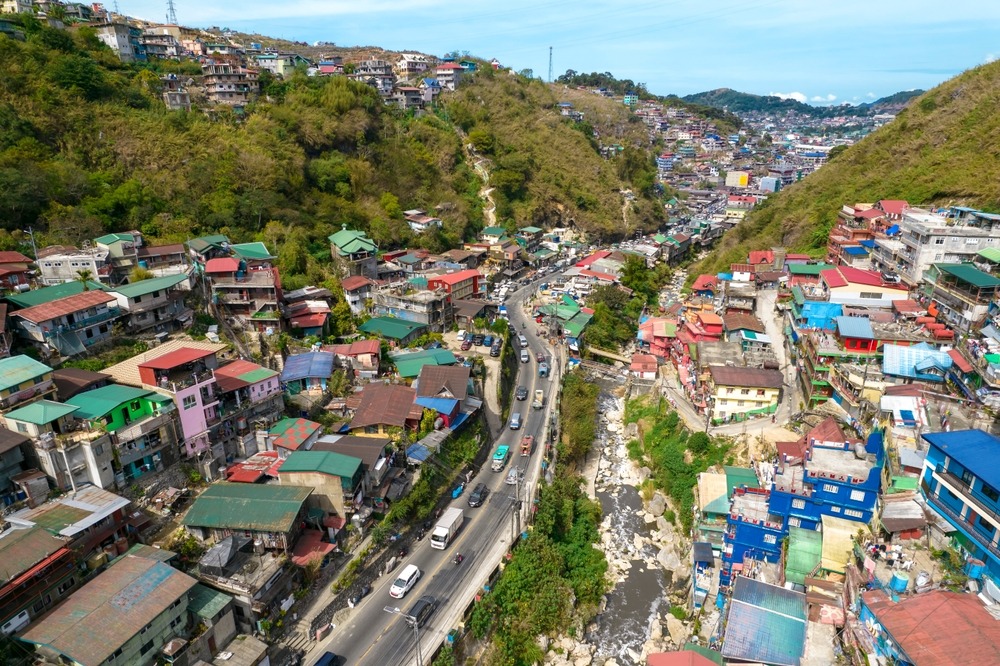
Perched at 1,400 meters above sea level in the Philippine Cordillera, Baguio delivers cool mountain air, contemporary art, and serves as your gateway to Sagada and Banaue.
At the heart of Benguet province on the island of Luzon, Baguio welcomes you to its mountain heights. Nicknamed the summer capital of the Philippines, the city offers visitors countless tourist and cultural attractions. On the agenda: visit its famous cathedral, browse the lively market, explore the president's retreat residence, and make your way to Lourdes Grotto hillside.
History
Before the city's founding, the region was inhabited by the Kankanaey and Ibaloi tribes and bore the name Kafagway. Following the Philippines' sale to the United States in 1898, the American administration discovered the site and appreciated its cool climate, a gift of its elevation. They decided to establish the Benguet provincial government there in 1900, followed by a rest base for the American army, Camp John Hay, in 1903. On September 9, 1909, Baguio officially became the "summer capital of the Philippines." The Philippine Military Academy relocated there in 1908.
The city's original plans were drawn by architect Daniel Burnham. It was constructed in the early 1900s. During the Pacific War, the Japanese bombed the city on December 8, 1941, and occupied Camp John Hay starting December 27. The Battle of Baguio, between February and April 1945, pitted American and Japanese forces against each other. The surrender of Japanese General Tomoyuki Yamashita at Camp John Hay marked the beginning of reconstruction.
Following Philippine independence in 1946, Baguio remained the government's summer seat until 1976. The Supreme Court still convenes there each summer. The city became the country's premier tourist destination after the war, but suffered severe damage in the Luzon earthquake of July 16, 1990. On July 1, 1991, Camp John Hay was returned to the Philippines and entrusted to a private operator.
What to See?
Burnham Park
Begin your discovery at Burnham Park. It's a cherished space known for its shaded pathways and peaceful atmosphere. You can take a boat ride, rent a bicycle, or simply take time to unwind by the lake.
Mines View Park
From Mines View Park, enjoy sweeping views of the mountains surrounding Baguio. The site invites contemplation and strolling, with a few local craft stalls where you can pick up a souvenir.
Camp John Hay
Once a significant historical site, Camp John Hay now offers lush grounds ideal for walks and relaxation. Explore the trails, organize a picnic, or simply enjoy the tranquility of this preserved space.
Baguio Cathedral
Situated on high ground, Baguio Cathedral defines the city's skyline with its Neo-Gothic architecture. As you cross its threshold, you discover a place steeped in history, valued as much for its serene atmosphere as for its stained glass and role in local life.
BenCab Museum
The BenCab Museum showcases contemporary Philippine art within a carefully curated natural setting. You can tour its galleries, then pause for coffee.
Baguio Night Market
As darkness falls, the night market animates Baguio's streets. You'll discover a wide variety of goods, from local specialties to craft items. The place lends itself equally to leisurely wandering and culinary exploration.
Wright Park
Wright Park captivates with its tree-lined avenues of pines and outdoor activities. You can take a peaceful stroll or try a horseback ride.
Baguio Gardens
Baguio Gardens offer well-maintained green spaces, perfect for walking and relaxation. Between flower beds and shaded pathways, you enjoy a pleasant setting for a break during your stay.
Where Is Baguio Located?
Baguio lies in the south-central part of Benguet province, in the Cordillera region, north of the island of Luzon. You'll find yourself in a city set on a plateau at approximately 1,400 meters elevation. From Manila, count on roughly 250 kilometers to reach this destination.
To get around Baguio, you have several options. Jeepneys crisscross the city and make it easy to reach the main neighborhoods. You can also choose taxis or tricycles for more direct and comfortable journeys. If you wish to explore the region at your own pace, rent a car or a motorcycle.
Want to discover this destination?
Our local advisors design your tailor-made trip.