Bontoc Museum
Bontoc Museum
A modest yet content-rich ethnographic museum founded in the 1970s in Bontoc, dedicated to the Ifugao, Kalinga, and Bontoc cultures of the Philippine Cordillera.
Located in Bontoc, in the Mountain Province in northern Philippines, the Bontoc Museum brings together an ethnographic collection devoted to the peoples of the Cordillera: Ifugao, Kalinga, Bontoc, and Kankanaey. Small in scale but dense in substance, it stands as an essential reference point for understanding mountain cultures before or after a visit to Sagada or the terraced rice fields.
Why visit the Bontoc Museum
The museum offers one of the most comprehensive presentations of Igorot cultures in the region. Its collection blends ritual objects, tools, textiles, archival photographs, and archaeological pieces. The visit is brief (plan for roughly 1 to 1.5 hours) yet illuminates many aspects of local heritage rarely explored elsewhere: headhunting practices, rice wine rituals, traditional village organization. It is also run by a religious community, giving it a heritage conservation dimension rather than a purely touristic one.
Museum history
The museum was founded in the 1970s by a Belgian nun stationed in Bontoc, with support from a community of Belgian sisters. The project arose from a desire to preserve material and intangible heritage threatened by social change in the region. Over the decades, the collection grew through objects entrusted or donated by the communities themselves, particularly around Ifugao culture (sometimes transcribed Ipugao, and grouped with other peoples under the Tagalog term Igorot, which broadly designates the mountain peoples of the Cordillera).
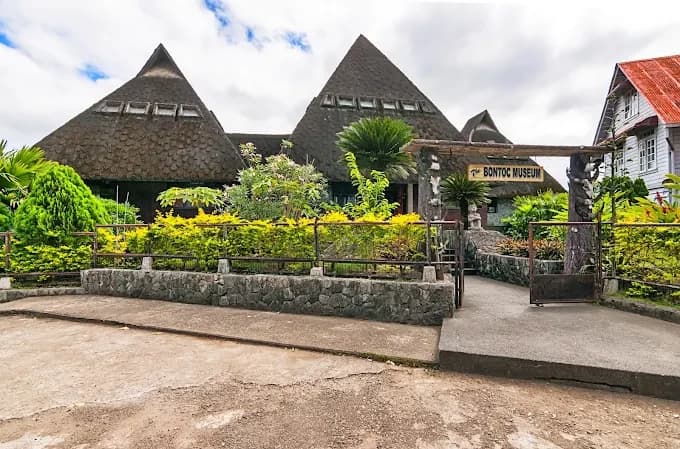
The main building echoes the form of traditional Ifugao houses, with compact proportions and local materials.
What to see in the museum
The collection is organized around several thematic clusters, allowing for comparison among Cordillera groups.
Ritual objects and headhunting artifacts
- Kalinga headhunter axes
- Gong handles (gansa) crafted from human jawbones
- Baskets fanitan intended to carry severed heads
- Bamboo pipes used during rice wine offerings
Textiles, adornment, and daily life
- Woven loincloths worn by men
- Headdresses made of serpent vertebrae worn by Bontoc women
- Bark raincoats used by the Ifugao
- Finely engraved nose flutes
Archaeology and archives
One section showcases archaeological objects unearthed in Cordillera caves, as well as early Chinese ceramics testifying to past trade networks. A series of black-and-white photographs complements the display: portraits of warriors, village scenes, and photographs by American missionaries from the early twentieth century.
Village replica at the rear of the museum
Outside the main building, a reconstructed Ifugao village presents several types of traditional structures, including the ilis, characteristic stone shelters. Visitors can enter certain buildings to observe interior arrangements and everyday objects. Photography is prohibited inside the museum but permitted in this outdoor section.
Practical information
- Address: Guinaang Road, Omfeg district, Bontoc, Mountain Province
- Duration: 1 to 1.5 hours on average
- Admission: moderate entrance fee, cash payment (Philippine pesos)
- Photography: prohibited inside, permitted in the reconstructed village area
- Hours: open during daytime, possible Sunday closure — verify locally before visiting
How to get there
The museum is located roughly 15 to 20 minutes on foot from Bontoc town hall, along a gentle slope. Tricycles, the main local transport, can drop you off for a short ride. Bontoc itself is served by buses from Baguio (5 to 6 hours via the Halsema Highway) and from Banaue (approximately 2.5 hours). Many travelers combine a stop here with a stay in Sagada, about 1 hour away by road.
Nearby attractions
Bontoc makes a useful base for exploring the Cordillera:
- Sagada: burial caves, hanging coffins, and hikes through Echo Valley
- Maligcong: terraced rice fields less crowded than those in Banaue, accessible by tricycle from Bontoc
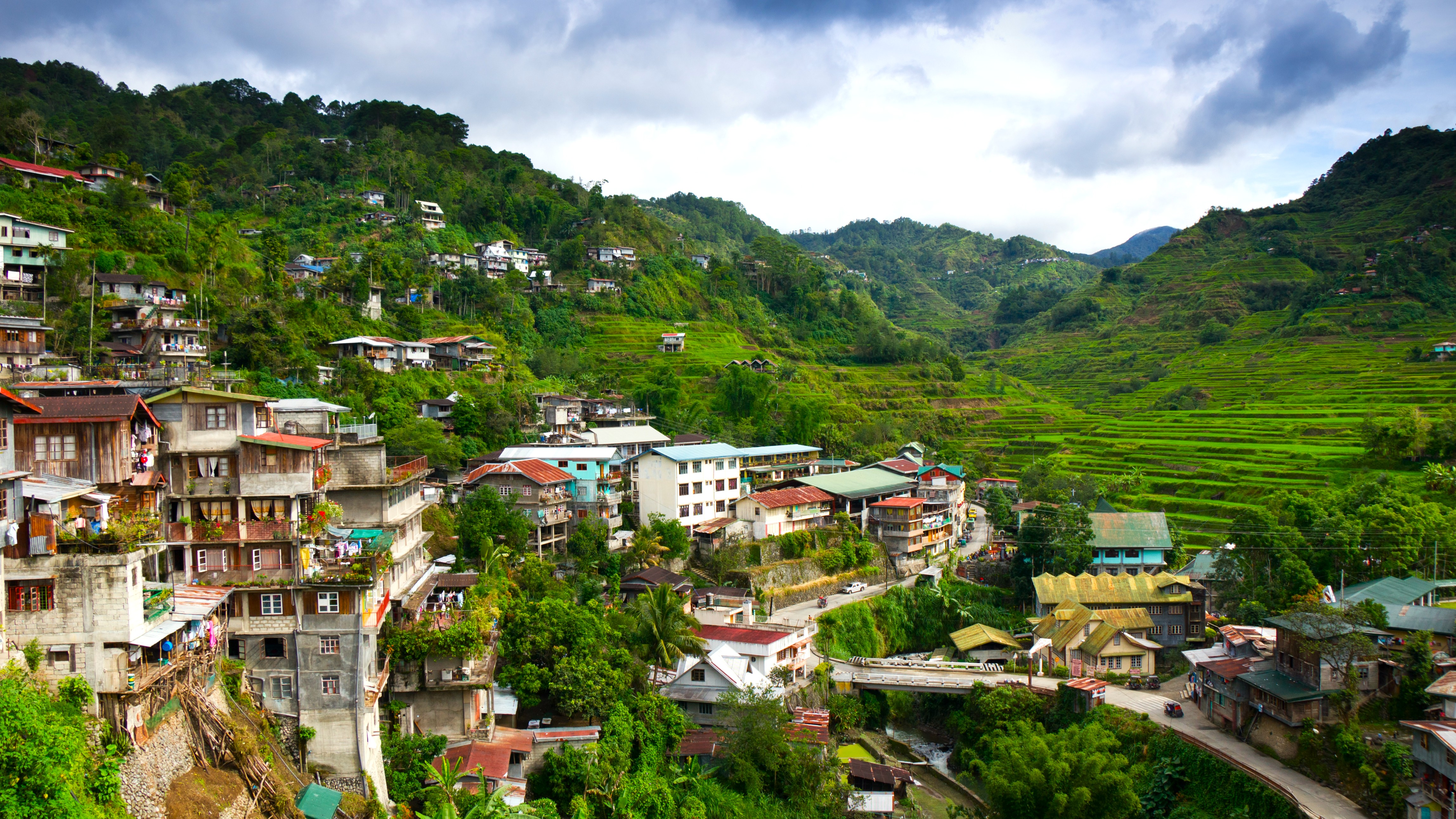
- Banaue and Batad: UNESCO-listed rice terraces, roughly 2.5 hours to the south
When to visit
The Cordillera region is best visited from November to April, during the dry season. June to October brings heavy rains and risks of landslides on mountain roads. The museum remains accessible year-round, but pairing a visit with outdoor activities is more enjoyable outside the rainy season.
Frequently asked questions
Frequently asked questions
Plan for 1 to 1.5 hours to explore the entire museum and the village replica outside.
Photography is forbidden inside the museum. It is permitted, however, in the outdoor area around the reconstructed Ifugao village.
Igorot is a Tagalog term designating the broader group of mountain peoples in the Cordillera. Ifugao and Bontoc are two of these groups, distinct in language and customs, alongside the Kalinga, Kankanaey, and Ibaloi.
Yes, Bontoc is roughly 1 hour from Sagada. Many travelers make a day trip in a jeepney or shared van.
Some pieces (axes, gongs made from human jawbones, baskets linked to headhunting) may unsettle young children. The visit remains brief and educational for older ones, however.
Plan your trip
The Bontoc Museum fits naturally into a circuit through northern Luzon, centered on Igorot cultures and Cordillera landscapes. To build a custom itinerary including Bontoc, Sagada, and the rice fields of Banaue, explore our Philippines travel suggestions.
Interested in this visit?
We can include it in your personalised itinerary.