Intramuros
Intramuros
A former Spanish fortified city at the heart of Manila, Intramuros brings together churches, ramparts and heritage sites that trace nearly four centuries of Philippine history.
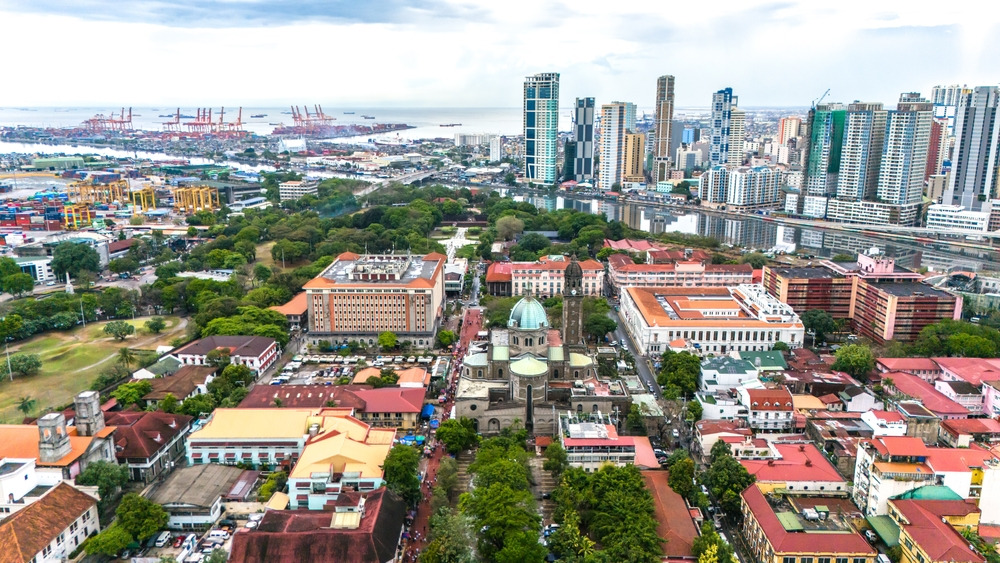
Intramuros is the old fortified quarter of Manila, founded by the Spanish in the 16th century on the south bank of the Pasig River. Its name comes from the Latin intra muros, "within the walls", referring to the ramparts that encircled the city. This perimeter today concentrates churches, fortifications and colonial buildings that trace nearly three and a half centuries of Spanish presence in the Philippines.
Why visit Intramuros
It is Manila's oldest quarter and one of the few Spanish colonial ensembles still legible in Southeast Asia. Most of it was destroyed during the Battle of Manila in 1945, but the ramparts, Fort Santiago and San Agustin Church survived or have been restored. For those interested in Philippine history—colonization, Christianization, the independence movement—Intramuros offers a chronological condensation across a few streets that is difficult to find elsewhere in the country. Walking here is pleasant, the perimeter can be covered on foot, and several sites can be visited within the same half-day.
History
The Spanish arrived in Manila in 1571 and chose the mouth of the Pasig to found their colonial capital. The quarter was encircled by stone ramparts, organized according to a grid plan of European inspiration, and quickly housed the colony's religious, military and administrative institutions. For more than three centuries, until the end of Spanish sovereignty in 1898, Intramuros concentrated power in the Philippines.
The quarter then came under American administration, followed by Japanese occupation during World War II. In February 1945, fighting to retake Manila destroyed almost all buildings. Reconstruction, partial, unfolded over several decades. Sections of the ramparts, several religious buildings and Fort Santiago regained their original appearance; other buildings were reconstructed identically on their historical foundations.
What to see at Intramuros
The Basilica-Cathedral of the Immaculate Conception
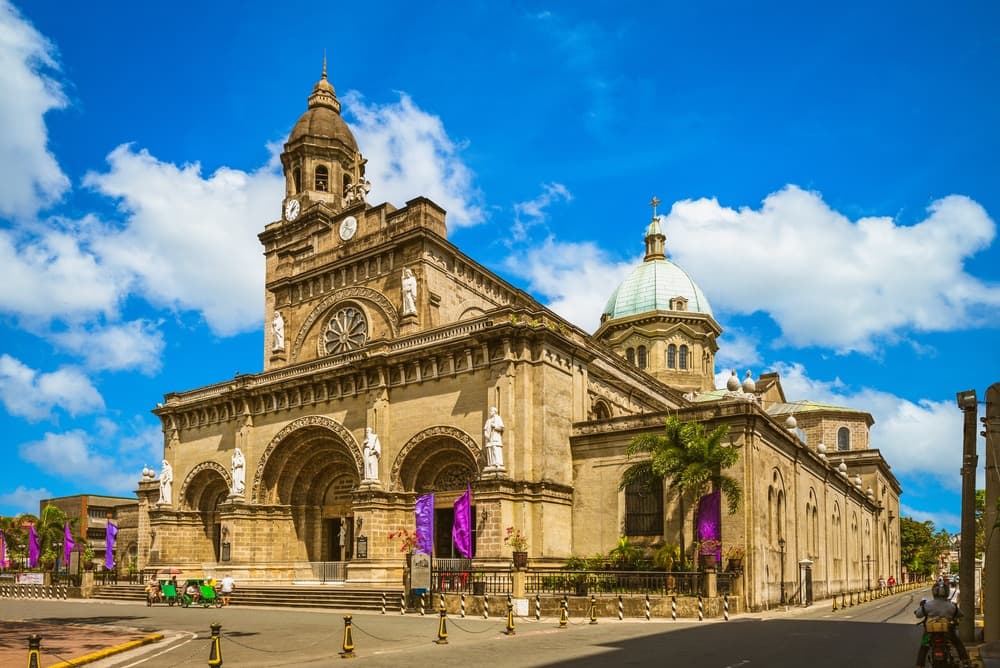
Located at the center of the quarter, the cathedral has experienced eight successive destructions and reconstructions since its first building in 1581, victim to earthquakes, fires and the 1945 bombing. The current building dates from 1950. John Paul II elevated it to the rank of minor basilica in 1981. It is today the seat of the Archdiocese of Manila.
San Agustin Church
Built in the 1590s, it is the oldest church still standing in the quarter and one of the very few buildings to withstand the 1945 bombing. Listed as a UNESCO World Heritage site, it preserves a stone nave, trompe-l'œil painted ceilings and a cloister converted into a museum of religious art.
Fort Santiago
This citadel guarded the entrance of the Pasig River and housed the Spanish garrison. The site holds a particular place in national memory: José Rizal, writer and major figure in Philippine independence, was detained here before his execution in 1896. The Rizal Shrine, arranged in his former cells, presents manuscripts, personal effects and a recreation of the hero's final journey to his place of execution.
The Governor's Palace (Palacio del Gobernador)
The former residence of Spanish crown representatives, the building was destroyed then rebuilt. The current edifice is modern and today houses administrative offices. Philippine executive power was transferred to Malacañan Palace, further upstream on the Pasig.
The ramparts and Casa Manila
A walk along the fortifications allows you to grasp the scale of the fortified city. Casa Manila, a house-museum reconstructed from a 19th-century bourgeois residence, usefully complements the visit to understand domestic life under the waning Spanish period.
Practical information
Plan for half a day to visit the main sites, a full day if you enter several museums. Tickets are purchased at the entrance of each monument, at moderate rates. Fort Santiago, San Agustin Church and Casa Manila are ticketed; the cathedral is free of charge outside services. Bring water, a hat and good shoes: the pavement is uneven and distances between sites are covered on foot. A guided tour in kalesa (traditional carriage) or by bike (Bambike offering) remains a pleasant alternative for connecting the main points.
When to visit Intramuros
The quarter can be visited year-round, but Manila's climate conditions the comfort of walking.
- December to February: most pleasant period, dry and relatively mild. Year-end atmosphere from September onwards, with decorations in the streets.
- March to May: dry season but very hot, often above 33 °C. Favor visits early in the morning or late in the afternoon.
- June to November: rainy season, with frequent showers from September to November and typhoon risk. A compact umbrella is essential.
How to get to Intramuros
Manila is served by two international airports: NAIA (Ninoy Aquino International Airport), about ten kilometers south of Intramuros, and Clark (Pampanga), approximately 90 km to the north.
From the airport
From NAIA, the simplest option remains a private transfer booked in advance or a ride via Grab, the local equivalent of Uber. At the airport, three types of taxis coexist: white taxis (metered), coupon taxis (fixed pre-paid rate) and official yellow taxis, more expensive. Always check that the meter is running or that the rate is announced before leaving. From Clark, expect 2 to 3 hours of driving depending on traffic, on direct bus to Manila then taxi/Grab to Intramuros.
By urban transport
The nearest light metro station is Central Terminal, on the LRT1 line, 20-30 minutes walk from the quarter. Many buses also serve Taft Avenue and Pasay routes. Within Intramuros, everything is covered on foot.
What to see around
Intramuros combines easily with other capital sites: Rizal Park (Luneta), just south of the ramparts, where Rizal was executed in 1896; the Binondo Chinese quarter, one of the oldest in the world, accessible by crossing the Pasig; or the National Museum of the Philippines, a short distance away. To extend your discovery of the country, consult our Manila guide or broaden to other regions with the Bontoc museum in the Cordillera, the Maquinit hot springs in Coron, or the surf spot Cloud Nine in Siargao.
Frequently asked questions
Frequently asked questions
Half a day is enough to walk through the main monuments. Plan a full day if you want to enter several museums (Fort Santiago, San Agustin, Casa Manila) and stroll along the ramparts.
Access to the quarter is free. Only certain sites charge admission at the entrance, at moderate rates: Fort Santiago, San Agustin Church (cloister and museum), Casa Manila. The cathedral is free of charge outside services.
Grab or a private transfer booked in advance offer the best value for simplicity. Official taxis (white metered, coupon, or yellow) are also available at the airport exit. Always check the rate before getting in.
Yes, the quarter can be explored very well on your own with a map or application. Guided walking tours, by kalesa (traditional carriage) or Bambike allow you to deepen the historical context.
The quarter is generally safe during the day, frequented by tourists and school groups. As everywhere in Manila, remain vigilant against pickpockets and avoid isolated alleys in the evening.
Preparing your trip
Intramuros is often the first step in a Philippines stay before heading to the rice fields of the North or the islands of the South. To build a custom itinerary integrating Manila, its surroundings and the archipelagos, consult our Philippines travel suggestions.
Interested in this visit?
We can include it in your personalised itinerary.